CobaltCore
CobaltCore (C5C3) is a Kubernetes-native OpenStack distribution for operating Hosted Control Planes. The project website at cobaltcore.dev introduces CobaltCore as a whole. This documentation covers the c5c3/cobaltcore repository, which delivers everything needed for a self-contained OpenStack control-plane stack: from the declarative infrastructure manifests, through the service operators, to the c5c3-operator orchestration layer — built with the Operator SDK (Go), controller-runtime, and Kubebuilder. The Architecture section shows how the pieces fit together, from the implemented management/target-cluster topology to the multi-cluster target picture.
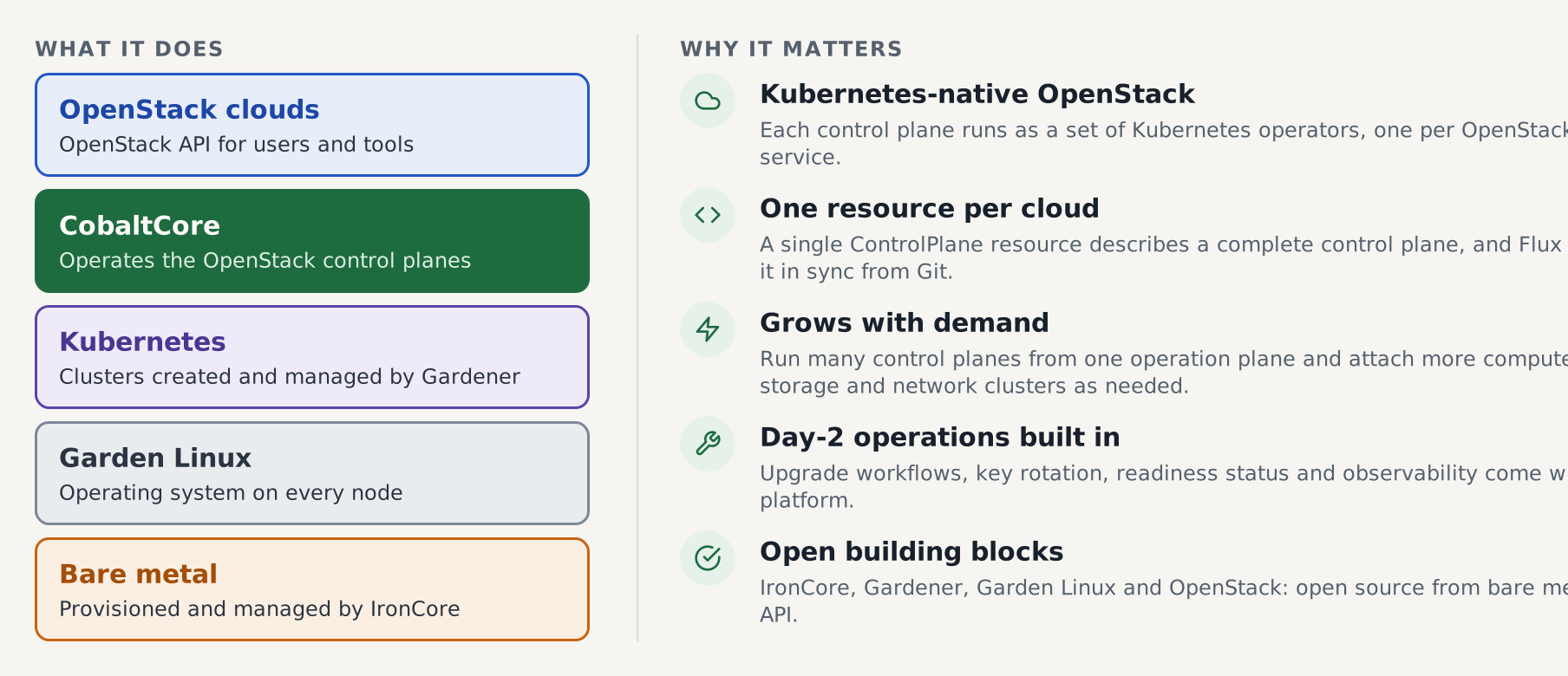
The layers below CobaltCore in this picture belong to the target picture. No deployment in this repository runs on IronCore or Garden Linux yet: the stack runs on a local kind cluster, or on a Gardener shoot on metal-stack in the Quick Start (metal-stack).
The Keystone operator is the reference implementation that establishes the patterns — CRD layout, sub-reconciler chain, webhooks, finalizers, instrumentation — replicated by every other service operator. Horizon, Glance, Placement, Barbican, Cinder, Nova, and Neutron with its OVN layer are onboarded on the same scaffolding. The c5c3-operator ties the services together into a single ControlPlane resource, which projects Nova through services.nova. Compute nodes join it through NovaCompute pools, which the Quick Start (metal-stack) runs on KVM; a separate compute cluster is the follow-on #1013.
Start here
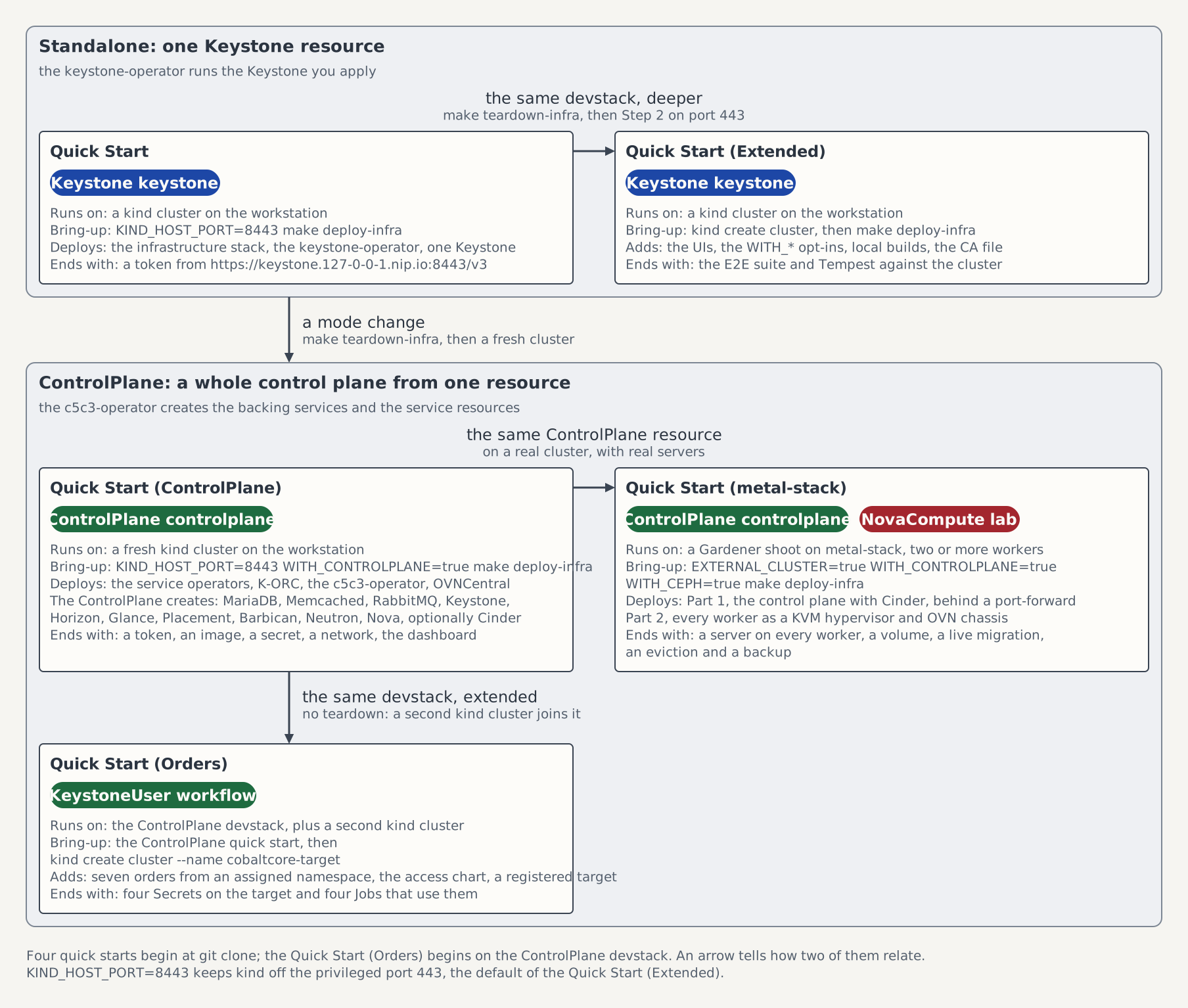
- Quick Start — from
git cloneto an authenticated Keystone API call on a local kind cluster. - Quick Start (Extended) — UI tours, the local-build path, the production HelmRelease, E2E, and Tempest.
- Quick Start (ControlPlane) — bring up a full ControlPlane through the c5c3-operator.
- Quick Start (metal-stack) — the same ControlPlane on a metal-stack cluster, where every worker is a KVM hypervisor and runs a server.
- Quick Start (Orders) — the Keystone, MariaDB and RabbitMQ pieces of a foreign service, ordered from an assigned namespace on the management cluster and on a target cluster.
The map shows what each quick start deploys, what it ends with, and how the five relate. Four of them begin at git clone; the Quick Start (Orders) begins on the ControlPlane devstack.
What's inside
- Operators. Service operators following a shared sub-reconciler pattern, with Keystone as the reference implementation and the c5c3-operator as the ControlPlane orchestration layer. Horizon, Glance, Placement, Barbican, Cinder, Nova, and Neutron are onboarded on the same conventions; the OVN operator runs the SDN layer Neutron programs.
- Shared library. Common types, conditions, config rendering, and Kubernetes helpers in
internal/common/, plus the Helm chart, operator packaging, and rotation scripts. See the Backend reference. - Infrastructure stack. Declarative FluxCD manifests for OpenBao HA, External Secrets Operator, MariaDB, Memcached, the Envoy Gateway, and the RabbitMQ Cluster Operator behind the message bus. See Infrastructure Manifests.
- CI/CD & container images. GitHub Actions for CI and image builds, and Nix builds for the OpenStack service images, nova-compute, libvirt and Tempest. See the CI Workflow and Nix Image Build.
- Test suites. Unit, envtest integration, Chainsaw E2E, Tempest, and Chaos Mesh coverage across the stack — see the Testing reference.
Go deeper
- Architecture — the implemented topology, the layering from Flux stack to ControlPlane orchestration, and the Core Components catalog.
- Guides — day-2 operations, key rotation, multi-tenant deployment, identity and storage backends, target clusters, and advanced configuration.
- Reference — CRDs, reconciler architecture, controller events, metrics, and the infrastructure, CI/CD, and testing internals.
- Future — idea sketches for where the operators could go next.
- Contributing — onboard a new operator or release, follow the guide conventions, and set up the development environment.
For an AI-assisted tour of the codebase, browse the repository on DeepWiki.