Tempest Test Infrastructure
Reference documentation for the Tempest API test infrastructure. This covers the Tempest container image, version management, per-service test configuration, the image verification script, local execution via hack/run-tempest.sh, the make tempest-test target, and CI integration in both ci.yaml and build-images.yaml. The infrastructure supports multiple releases: the tempest job in ci.yaml uses a release matrix to validate each OpenStack release independently, and build-images.yaml dynamically discovers releases for the Tempest image pipeline.
File Locations
| File | Purpose |
|---|---|
images/tempest/image.nix | Tempest container image, built by Nix from nix/locks/<release>/tempest/ |
releases/<release>/test-refs.yaml | PyPI version pins for test tooling (single source of truth), per release |
tests/tempest/keystone-2026-1/ | Keystone 2026.1 Tempest configuration (tempest.conf, include-tests.txt, exclude-tests.txt) |
tests/tempest/keystone-2026-2/ | Keystone 2026.2 Tempest configuration |
tests/tempest/glance-2026-1/ | Glance 2026.1 Tempest configuration: the tempest.conf / include-tests.txt / exclude-tests.txt triplet, a 00-keystone-cr.yaml identity CR named keystone-glance-tempest-2026-1, and four extra fixtures the CI job applies — 01-catalog-setup-job.yaml (image-catalog bootstrap Job), 02-glance-cr.yaml (Glance CR), 03-glancebackend-cr.yaml (default GlanceBackend CR), 04-glancebackend2-cr.yaml (second, non-default store so the copy-image import test has a copy target) |
tests/tempest/glance-2026-2/ | Glance 2026.2 Tempest configuration (same file set; identity CR keystone-glance-tempest-2026-2) |
tests/tempest/barbican-2026-1/ | Barbican 2026.1 Tempest configuration: the tempest.conf / include-tests.txt / exclude-tests.txt triplet, a 00-keystone-cr.yaml identity CR named keystone-barbican-tempest-2026-1, and four extra fixtures the CI job applies (01-catalog-setup-job.yaml, the key-manager catalog bootstrap Job; 02-barbican-cr.yaml, the Barbican CR; 03-barbicansecretstore-cr.yaml, the default BarbicanSecretStore the job waits on before the Barbican CR; 04-policy-check-job.yaml, the Job that checks Barbican enforces its secure-RBAC policy defaults) |
tests/tempest/barbican-2026-2/ | Barbican 2026.2 Tempest configuration (same file set; identity CR keystone-barbican-tempest-2026-2) |
tests/tempest/neutron-2026-1/ | Neutron 2026.1 Tempest configuration: the tempest.conf / include-tests.txt / exclude-tests.txt triplet, a 00-keystone-cr.yaml identity CR named keystone-neutron-tempest-2026-1, and four extra fixtures the CI job applies (01-catalog-setup-job.yaml, the network catalog bootstrap Job; 02-messaging-secret.yaml, the RabbitMQ credentials the Neutron mounts; 03-ovncentral-cr.yaml, the OVNCentral the job waits on before the Neutron CR; 04-neutron-cr.yaml, the Neutron CR) |
tests/tempest/neutron-2026-2/ | Neutron 2026.2 Tempest configuration (same file set; identity CR keystone-neutron-tempest-2026-2) |
tests/tempest/cinder-2026-1/ | Cinder 2026.1 Tempest configuration: the tempest.conf / include-tests.txt / exclude-tests.txt triplet, a 00-keystone-cr.yaml identity CR named keystone-cinder-tempest-2026-1, and fifteen extra fixtures the CI job applies (01-catalog-setup-job.yaml, the catalog bootstrap Job for the five services this leg registers: block-storage, image, compute, placement and network; 02-glance-cr.yaml and 03-glancebackend-cr.yaml, the image service the volume tests create volumes from and its default S3 store; 04-cinderbackend-cr.yaml and 05-cinderbackupbackend-cr.yaml, the NFS volume backend and backup target; 06-cinder-cr.yaml, the Cinder CR; 07-image-seed-job.yaml, the Job that uploads the image [compute] image_ref points at; 08-messaging-secret.yaml through 13-nova-cr.yaml, the compute stack the compute-tagged volume tests boot a server on (the Neutron's transport-URL Secret, an OVNCentral, a Neutron, a Placement, the metadata shared secret and the Nova); 14-fake-compute.yaml, one fake-driver nova-compute registered under the host name fake-1; 15-flavor-seed-job.yaml, the Job that creates the two flavors tempest.conf pins) |
tests/tempest/cinder-2026-2/ | Cinder 2026.2 Tempest configuration (same file set; identity CR keystone-cinder-tempest-2026-2) |
tests/tempest/nova-2026-1/ | Nova 2026.1 Tempest configuration: the tempest.conf / include-tests.txt / exclude-tests.txt triplet, a 00-keystone-cr.yaml identity CR named keystone-nova-tempest-2026-1, and fourteen extra fixtures the CI job applies (01-catalog-setup-job.yaml, the compute, placement, image and network catalog bootstrap Job; 02-messaging-secret.yaml, the transport-URL Secret the Neutron's messaging step reads; 03-ovncentral-cr.yaml, the OVN databases the Neutron reads its addresses off; 04-neutron-cr.yaml, the network service every server binds its port on; 05-placement-cr.yaml, the inventory the compute publishes; 06-glance-cr.yaml and 07-glancebackend-cr.yaml, the image service the servers boot from and its default S3 store; 08-image-seed-job.yaml, the Job that uploads the two 1 MiB raw images [compute] image_ref and image_ref_alt point at; 09-metadata-secret.yaml and 10-nova-cr.yaml, the metadata shared secret and the Nova CR; 11-fake-compute.yaml, one fake-driver nova-compute whose [DEFAULT] host is the kind node's name; 12-ovnchassis-cr.yaml, the chassis a port binds to; 13-neutronmetadataagent-cr.yaml, the agent that answers 169.254.169.254; 14-flavor-seed-job.yaml, the Job that creates m1.nano and m1.micro) |
tests/tempest/nova-2026-2/ | Nova 2026.2 Tempest configuration (same file set; identity CR keystone-nova-tempest-2026-2) |
tests/container-images/verify_tempest.sh | Image verification script (PASS/FAIL counters) |
hack/run-tempest.sh | Local orchestration script for running Tempest against a kind cluster |
hack/ci-run-tempest.sh | CI-specific Tempest wrapper with port-forwarding and config generation |
hack/ci-generate-tempest-matrix.sh | Generates the tempest job matrix from releases/*/, emitting one leg per service (keystone, glance, barbican, neutron, cinder, nova) per release |
hack/tempest/extract-failed.py | Print anchored regex patterns for failed testcases in a JUnit report (used to build the retry include-list) |
hack/tempest/merge-retry-junit.py | Merge a retry subunit stream into a JUnit report, rewriting resolved failures as flakes |
hack/tempest/run-tests.sh | Shared in-container runner invoked by both runners; holds the phase + retry + exit-code logic so it stays identical between CI and local runs |
Makefile | tempest-test target delegates to hack/run-tempest.sh |
.github/workflows/ci.yaml | tempest job with release matrix |
.github/workflows/build-images.yaml | build-tempest and merge-tempest-image jobs (release-parameterized via generate-matrix) |
Architecture
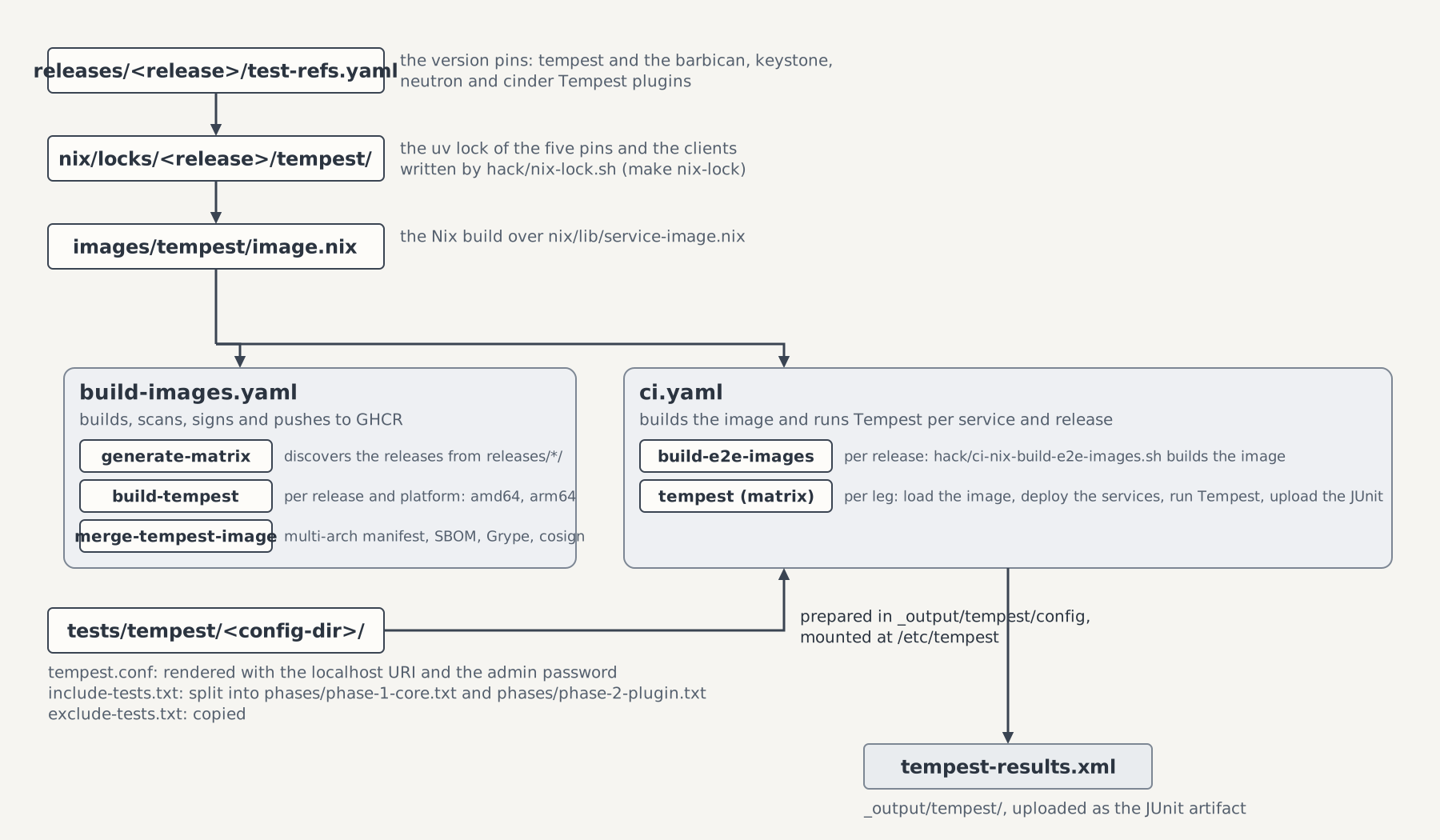
Version Management
test-refs.yaml
Location: releases/<release>/test-refs.yaml
Maps each test tool to a PyPI version pin. This file is the single source of truth for what version of each test tool is installed in the Tempest container image. It is separate from source-refs.yaml (which tracks git refs for OpenStack services) so that test tooling versions can evolve independently.
Format:
tempest: "46.3.0"
keystone-tempest-plugin: "0.22.0"
The tempest pin may run ahead of the release line a directory represents: tempest is branchless (released tags never receive fixes) and upstream validates current plus recent stable releases with the latest tag. The 2026.1 directory pins tempest 46.3.0 and the 2026.2 directory 47.0.0; renovate.json disables major updates under releases/**/test-refs.yaml, so 2026.1 stays on 46.x. The glance legs need >= 46.2.0, where the web-download bad-URL negative test accepts the synchronous 400 that glance's DNS-based URI filtering returns.
Each key is a PyPI package name. Values are quoted strings representing exact version pins. hack/nix-lock.sh reads the five keys into the tempest lock nix/locks/<release>/tempest/, and a missing key fails it with nix-lock.sh: no key '<key>' in releases/<release>/test-refs.yaml. The merge-tempest-image job reads the tempest version for its version tag:
TEMPEST_VERSION=$(hack/resolve-test-ref.sh releases/<release>/test-refs.yaml tempest)To update versions, edit test-refs.yaml and run make nix-lock; the nix-lock-check job fails until the lock matches the pins.
Container Image
Image expression
Location: images/tempest/image.nix, built from the lock nix/locks/<release>/tempest/
The Tempest image is built by Nix like the service images (Nix Image Build) but differs in three ways: (1) its lock installs from PyPI instead of a git source tree, (2) it has no WSGI entrypoint, and (3) it has no unit-test run. The lock pins these packages, resolved against the release's constraints:
| Package | Purpose |
|---|---|
tempest | OpenStack Tempest testing framework |
barbican-tempest-plugin | Barbican-specific Tempest test plugins; pinned per release in test-refs.yaml (every release pins 4.6.0) |
keystone-tempest-plugin | Keystone-specific Tempest test plugins |
neutron-tempest-plugin | Neutron-specific Tempest test plugins; pinned per release (3.2.0 for 2026.1, 3.3.0 for 2026.2). Version 3.3.0 imports neutron_lib.services.pvlan, which the neutron-lib 2026.2 constrains (5.0.1) ships and the one 2026.1 constrains (3.24.0) does not |
cinder-tempest-plugin | Cinder-specific Tempest test plugins; every release pins 1.23.0, since the plugin needs only pbr, oslo.config, oslo.serialization and tempest>=40.0.0 and no release's upper-constraints.txt narrows those |
python-openstackclient | openstack CLI, used by the full-chain ControlPlane E2E verify Job (token issue / catalog list); version pinned by upper-constraints.txt |
osc-placement | openstack CLI placement plugin, used by the full-chain ControlPlane E2E placement round-trip (resource class list); version pinned by upper-constraints.txt |
python-barbicanclient | openstack secret commands, used by the full-chain ControlPlane E2E verify Job round-trip; version pinned by upper-constraints.txt |
python-subunit | Subunit test result streaming protocol |
junitxml | Subunit-to-JUnit XML conversion (subunit2junitxml) |
defusedxml | Hardened XML parsing for the result-processing tooling |
The image creates /etc/tempest/, owned by root, where the tempest Job mounts its configuration. hack/tempest/run-tests.sh sets HOME=/tmp, so the read-only /var/lib/openstack needs no owner change. The labels are the five of Labels and reproducibility; org.opencontainers.image.version is the tempest version of the lock.
Final image properties:
| Property | Value |
|---|---|
| User | openstack (UID 42424) |
tempest CLI | Available via PATH (/var/lib/openstack/bin/tempest) |
openstack CLI | Available via PATH; verified by verify_tempest.sh (openstack --version) |
subunit2junitxml | Available via PATH |
| Build tools | Absent (gcc, cc, uv and python3-config are not on PATH; /nix/store holds no compiler, binutils or uv package) |
Local Build
Build the Tempest image of a release with Nix and load it into Docker:
RELEASE=2026.1   # or 2026.2
nix build ".#tempest-${RELEASE//./_}-image" && ./result | docker load
bash tests/container-images/verify_tempest.sh "tempest:${RELEASE}"
hack/run-tempest.sh runs the same build when BUILD_IMAGE is true (the default), naming the attribute of the host's system (packages.x86_64-linux. or packages.aarch64-linux.), and tags the loaded tempest:<release> as TEMPEST_IMAGE. Without nix on PATH it exits 1 with run-tempest.sh: nix not found; install Nix or rerun with BUILD_IMAGE=false TEMPEST_IMAGE=ghcr.io/c5c3/tempest:<release>. The flake builds images for those two Linux systems only, so on any other host (macOS) it exits 1 before Nix runs, naming the host and the same BUILD_IMAGE=false rerun. tests/unit/hack/run_tempest_build_image_test.sh pins the build with stub nix, docker and uname commands.
Test Configuration
Per-service Tempest configuration lives under tests/tempest/<service>/. Each service directory contains three files: a Tempest configuration file, an include list, and an exclude list.
tempest.conf
Location: tests/tempest/<service>/tempest.conf
INI-format configuration file for the Tempest testing framework. Key sections for the Keystone service:
| Section | Key | Value | Purpose |
|---|---|---|---|
[DEFAULT] | log_dir | /tmp/tempest-logs | Log output directory inside container |
[identity] | uri_v3 | http://keystone-tempest-<slug>.openstack.svc:5000/v3 | Keystone v3 API endpoint (in-cluster DNS) |
[auth] | use_dynamic_credentials | true | Use dynamic credentials (Tempest creates the projects and users of its tests) |
[auth] | admin_username | admin | Admin user for API authentication |
[auth] | admin_password | ${KEYSTONE_ADMIN_PASSWORD} | Injected at runtime from K8s secret |
[auth] | admin_project_name | admin | Admin project scope |
[auth] | admin_domain_name | Default | Admin domain scope |
[identity-feature-enabled] | api_v3 | true | Enable v3 identity API tests |
[service_available] | nova | false / true | Nova is deployed on the nova and cinder legs; the keystone, glance, barbican and neutron legs set false |
[service_available] | neutron | false / true | Neutron is deployed on the neutron, nova and cinder legs; the keystone, glance and barbican legs set false |
[service_available] | cinder | false / true | Cinder is deployed on the cinder legs; the keystone, glance, barbican, neutron and nova legs set false |
[service_available] | glance | false / true | Glance is deployed on the glance, cinder and nova legs; the keystone, barbican and neutron legs set false |
[service_available] | placement | true | Placement is deployed on the nova and cinder legs; no other leg writes the key |
[service_available] | barbican | false / true | Barbican is deployed on the barbican legs; the neutron, cinder and nova legs set false; the keystone and glance legs do not write the key |
[service_available] | swift | false | Swift is not deployed |
[service_available] | horizon | false | Every leg sets false |
The admin_password placeholder ${KEYSTONE_ADMIN_PASSWORD} is resolved at runtime:
- Local execution:
hack/run-tempest.shextracts it from thekeystone-adminK8s secret and substitutes it into a generated copy oftempest.confusingsed - CI execution:
hack/ci-run-tempest.shextracts it viakubectl get secretand substitutes it into a generated copy oftempest.confusingsed
include-tests.txt
Location: tests/tempest/<service>/include-tests.txt
One regex pattern per line. Lines starting with # are comments. Blank lines are ignored. Patterns are matched against Tempest test IDs.
For Keystone, two patterns include all identity-related tests:
| Pattern | Matches |
|---|---|
tempest.api.identity | Core Tempest identity API tests |
keystone_tempest_plugin.tests | Keystone-specific plugin tests |
The neutron legs select the core tempest.api.network CRUD modules (networks, ports, security groups, subnet pools) and the matching neutron_tempest_plugin.api ones. The router, floating-IP and provider-network suites stay out until the devstack has an external provider network; include-tests.txt records that reason next to the patterns it keeps.
The cinder legs take the whole volume tree of both scopes, tempest.api.volume and cinder_tempest_plugin.api.volume. What the environment cannot serve is switched off through [volume-feature-enabled] in tempest.conf instead: the NFS driver takes no snapshots.
The nova legs take the whole compute tree in one pattern, tempest.api.compute. Nothing lands in their plugin phase, which the runner allows.
Scope-split invariant
Both runners (hack/ci-run-tempest.sh and hack/run-tempest.sh) split this include list into two phase files at runtime and run stestr twice in the same workspace:
phase-1-core.txt— every non-comment line that starts withtempest.phase-2-plugin.txt— every non-comment line matching^[a-z0-9_]+_tempest_plugin\., which coverskeystone_tempest_plugin.,barbican_tempest_plugin., and any plugin added later without naming it in the runners
The two phases run sequentially; within each phase stestr runs at TEMPEST_CONCURRENCY (default 4).
Each runner enforces that every non-comment, non-empty line in include-tests.txt lands in exactly one phase. A line with any other prefix causes the runner to abort with a clear error — this guards against silent drops when new include patterns are added.
Either phase may be empty, and both runners treat that case the same way. The glance legs ship a pure core-tempest include list (tempest.api.image only), which leaves phase-2-plugin.txt empty; the barbican legs ship a pure plugin list (barbican_tempest_plugin.tests.api only), which leaves phase-1-core.txt empty. hack/tempest/run-tests.sh skips whichever phase file is empty and writes an empty subunit stream in its place so the concatenations still line up, instead of running stestr against an empty include list. Only a split that leaves both phases empty is a hard error, in hack/ci-run-tempest.sh and hack/run-tempest.sh alike: an include list with no non-comment pattern at all lands there and exits 1.
Why sequential. Keystone re-resolves the list of enabled federation service providers on every POST /v3/auth/tokens and GET /v3/auth/tokens call and injects it into the response body; the token itself does not cache it. tempest.api.identity.v3.test_tokens.TokensV3Test.test_validate_token issues a token via POST, validates it via GET, and asserts the two response bodies are equal. When keystone_tempest_plugin.tests.api.identity.v3. test_service_providers.ServiceProvidersTest runs concurrently on another stestr worker, its per-test addCleanup deletes the service provider it created — and if that cleanup lands in the ~20 ms window between test_validate_token's POST and GET, the two responses diverge on the service_providers key and the assertion fails.
Upstream's openstack/keystone keystone-tempest gate job sets tempest_test_regex: "keystone_tempest_plugin" and therefore only runs keystone_tempest_plugin.* tests — the core tempest.api.identity.* suite (which contains test_validate_token) never runs in the same Tempest invocation as the service-providers tests, so upstream never observes this race. We run both suites for fuller coverage and replicate the isolation by running them in two separate stestr invocations.
The two phases each emit a subunit stream (phase-1-core.subunit, phase-2-plugin.subunit); the runner concatenates them into tempest.subunit and converts that to JUnit XML. Subunit v2 is stream-concatenation safe by design.
Serial retry of failing tests
After both phases, the runner inspects the JUnit report: if any test is marked failed or errored, those test IDs are extracted and rerun once in a third stestr run invocation with --concurrency 1. The retry output is written to retry.subunit, appended to the combined subunit stream, and merged into the JUnit report: tests that pass on retry have their <failure>/<error> children removed, the enclosing <testsuite> counters are decremented, and a <system-out> note records flaky: failed on first run, passed on retry. Tests that still fail after retry stay as failures.
The two helpers live at hack/tempest/extract-failed.py (reads the JUnit report, prints anchored regex patterns for each failed classname.method) and hack/tempest/merge-retry-junit.py (rewrites the JUnit report from the retry subunit stream). The phase + retry + exit-code sequence itself lives in hack/tempest/run-tests.sh, which is invoked inside the container by both hack/ci-run-tempest.sh and hack/run-tempest.sh. All three files are staged next to tempest.conf so they are available at /etc/tempest/ inside the container. A failure inside either Python helper (missing dependency, parse error) is caught by the runner and falls back to the original stestr exit code rather than aborting the whole Tempest run.
The final exit code is derived from the (possibly retry-adjusted) JUnit report: any remaining failures or errors fail the job. If the retry resolved every failure the runner exits 0. If the initial stestr process crashed hard enough that no test was recorded, the runner exits 1 at its zero-test checks. The captured phase exit code decides the result only when the report lists tests, no failures or errors remain, and no retry was merged.
exclude-tests.txt
Location: tests/tempest/<service>/exclude-tests.txt
Same format as include-tests.txt. Patterns exclude tests that require services or infrastructure not available in the CI kind cluster:
| Pattern | Reason for exclusion |
|---|---|
keystone_tempest_plugin\.tests\..*ldap | Requires a live LDAP server |
keystone_tempest_plugin\.tests\..*federation | Requires an external IdP (SAML2/OAuth2) |
keystone_tempest_plugin\.tests\..*oauth2 | Requires an external authorization server |
Tracking version-coupled RBAC excludes
Unlike the infrastructure excludes above, the RBAC excludes are coupled to a specific tempest plugin version — they exist because the plugin's expected status codes disagree with the service's default policies for that release. They must not silently outlive their cause. Each RBAC exclude group therefore carries a # tracked-by: / # re-evaluate-on: comment pair:
# tracked-by: <issue URL>
# re-evaluate-on: keystone-tempest-plugin > <current pinned version>
On every keystone-tempest-plugin bump, re-run the excluded RBAC groups against the new plugin and drop any pattern upstream has fixed. The re-evaluate-on version is per group and per release: two groups carry > 0.20.0 and the third > 0.22.0 in the 2026.1 list (tests/tempest/keystone-2026-1/exclude-tests.txt:27,31,37). Both test-refs.yaml pin 0.22.0; the 2026.2 list carries no RBAC group (below).
The RBAC suite runs only when the plugin sees scope enforcement. From 0.22.0 on it reads [identity-feature-enabled] enforce_scope, which every keystone tempest.conf sets to true. Plugin 0.21.0 read only Tempest's [enforce_scope] keystone, which they leave unset, and skipped all 325 RBAC classes. The first 0.22.0 run failed three tests the release's default policy answers differently from the plugin, and a group tracked by #1127 excludes them. On 2026.1 that is test_ec2_credential, where a reader persona gets 201 creating its own EC2 credential and the plugin expects 403. The group carries re-evaluate-on: keystone-tempest-plugin > 0.22.0 in that release list. The barbican legs follow the same convention for their one exclude, barbican_tempest_plugin\.tests\.api\.test_quotas\.ProjectQuotasTest\.test_manage_project_quotas. The plugin runs that test with a credential that holds only key-manager:service-admin, which Barbican's new policy defaults refuse for project quotas. The exclude is tracked by #991 and carries re-evaluate-on: barbican-tempest-plugin > 4.5.0 on 2026.1 and re-evaluate-on: barbican-tempest-plugin > 4.6.0 on 2026.2. The excluded test was the leg's only runtime sign of that policy posture, so the leg's 04-policy-check-job.yaml Job asserts the posture before Tempest runs. The 2026.2 keystone list carries neither the #1127 group nor the #480 RBAC groups of the 2026.1 list, so the 2026.2 keystone leg runs those tests until a 2026.2 run shows their outcome.
Compute configuration of the nova legs
tests/tempest/nova-<slug>/tempest.conf carries the [compute-feature-enabled] table the Phase-0 lab of #1015 recorded in its section (d.6), kept as the lab measured it: 29 flags true, three false. That run covered 522 tests in 42 minutes at two stestr workers. With every flag on, the same suite took 91 minutes and failed 18 tests.
| Flag | Value | Reason |
|---|---|---|
snapshot | false | The fake driver's snapshot sets IMAGE_UPLOADING and never uploads, so the Glance image stays queued. Each test that takes one waits about 300 s and then fails |
stable_rescue | false | Its rescue image is a snapshot of a server, so it runs into the same wait |
spice_console | false | The API answers 400 Unavailable console type spice-direct |
The migration flags stay true. The tests they gate skip on [compute] min_compute_nodes = 1 instead of on the flag: the live-migration, cold-migration and multi-node classes all need a second host. One kind node carries one chassis hostname, and neutron binds a port only to a host with a live chassis, so a second compute could not bind ports.
Four tests are excluded outright. exclude-tests.txt holds them as one group under the # tracked-by: / # re-evaluate-on: convention described above, tracked by #1014, with two conditions that retire it: a compute driver other than nova's fake driver on this leg for the last three patterns, and a leg that creates a default external network and subnet pool for the first.
| Excluded test | Reason |
|---|---|
test_auto_allocate_network.AutoAllocateNetworkTest.test_server_multi_create_auto_allocate | 400 Unable to automatically allocate a network for project. neutron loads auto_allocate as a default service plugin, so tempest finds the auto-allocated-topology extension and runs the test, and this leg has no default external network and no subnet pool to allocate from |
test_hypervisor.HypervisorAdminTestJSON.test_get_hypervisor_uptime | The fake driver has no get_host_uptime, and the base driver raises NotImplementedError |
test_server_actions.ServerActionsTestOtherB.test_get_console_output_with_unlimited_size | The fake console output is three fixed lines. The other console_output tests pass, which is why that flag stays true |
test_novnc.NoVNCConsoleTestJSON.test_novnc | The console HTML and the websocket upgrade pass, then the proxy dials the fake driver's console target fakevncconsole.com:6969, cannot resolve it and closes the socket. The pattern ends in \[, which keeps test_novnc_bad_token in the run |
The cinder legs take the other side of the same stack. They run tempest.api.volume and cinder_tempest_plugin.api.volume with [service_available] nova = true against a fake compute named fake-1 whose servers carry no NIC, which is what lets test_incremental_backup run there: that test boots a server between its full and its incremental backup and has no compute guard.
Two compute-tagged volume tests are excluded on every cinder leg, as their own group under the same convention and tracked by #1014: test_volumes_backup.VolumesBackupsTest.test_backup_create_attached_volume and test_volumes_backup.VolumesBackupsTest.test_volume_backup_incremental. Both back up a volume while it is attached to a server. On the NFS backend that backup is served from a temporary clone, and cloning an in-use volume takes an online snapshot through Nova's assisted-snapshot API; the fake driver has no volume_snapshot_create, so cinder-volume waits 600 s for a progress update that never comes, the backup stays creating past tempest's 300 s, and the test spends another 300 s failing to delete the still-attached volume. The group retires with a compute driver other than the fake one on this leg, or an NFS backend that supports snapshots (#979 D3 keeps nfs_snapshot_support at false).
Adding a New Service
Tempest coverage is keyed per service × release. glance is the worked example: hack/ci-generate-tempest-matrix.sh emits a keystone, a glance, a barbican, a neutron, a cinder and a nova leg for every release, so a new service needs one config directory per release, not a single directory. To add another service:
- Create a
tests/tempest/<service>-<slug>/directory for each release (e.g.<service>-2026-1and<service>-2026-2), each withtempest.conf,include-tests.txt,exclude-tests.txt, and the00-keystone-cr.yamlidentity CR the job waits on. The matrix generator fails thechangesjob if a release is missing the directory, so notempestleg starts. A service with its own operator payload also ships the CRs the job applies before Tempest runs — glance carries01-catalog-setup-job.yaml(registers the image service + endpoints in Keystone),02-glance-cr.yaml,03-glancebackend-cr.yaml, and04-glancebackend2-cr.yaml(a second, non-default store: the copy-image import test only executes a real copy when there is a store the image is not already in). - Set
[service_available]flags to match the deployed services and point[identity]uri_v3at the leg's identity CR (glance authenticates against its ownkeystone-glance-tempest-<slug>CR, not the shared keystone leg's CR). - Extend
hack/ci-generate-tempest-matrix.shto emit the newserviceleg. If the service needs an extra port-forward, thread it throughhack/ci-run-tempest.shthe way glance uses the optionalGLANCE_K8S_NAMEenv (9292 forward +/healthcheckpoll + host mappings), barbican the optionalBARBICAN_K8S_NAME(the same three steps on 9311), neutron the optionalNEUTRON_K8S_NAME(the same three steps on 9696), cinder the optionalCINDER_K8S_NAME(the same three steps on 8776), nova the optionalNOVA_K8S_NAME(the same three steps on 8774, polled on/) and placement the optionalPLACEMENT_K8S_NAME(the same three steps on 8778, polled on/), then add the conditional deploy steps to thetempestjob inci.yaml, gated onmatrix.service == '<service>'.
The scope-split needs no edit for a new plugin: phase-2-plugin.txt is filled by ^[a-z0-9_]+_tempest_plugin\., which already matches any <service>_tempest_plugin. pattern. A leg that selects only plugin tests, or only core tempest. ones, leaves the other phase empty, which both runners allow.
A service tested through core tempest.api.* alone needs no image change. One that brings its own Tempest plugin adds its key to the plugin list of hack/nix-lock.sh plus a version pin to every release's test-refs.yaml, and runs make nix-lock, the way barbican-tempest-plugin, neutron-tempest-plugin and cinder-tempest-plugin are wired. hack/run-tempest.sh (local execution) runs a single keystone leg and accepts SERVICE, RELEASE, and ADMIN_SECRET overrides.
Image Verification
Location: tests/container-images/verify_tempest.sh
Validates that the built Tempest container image meets requirements. Uses the same PASS/FAIL counter pattern as other verify_*.sh scripts and sources tests/lib/assertions.sh for assertion helpers.
Usage:
bash tests/container-images/verify_tempest.sh [image_name]
# Default image: c5c3/tempest:46.3.0
Test cases:
| Test | Assertion | Validates |
|---|---|---|
test_tempest_version | tempest --version exits 0 with non-empty output | Tempest CLI is installed and functional |
test_keystone_tempest_plugin_importable | python3 -c 'import keystone_tempest_plugin' exits 0 | Plugin is installed in the virtualenv |
test_barbican_tempest_plugin_importable | python3 -c 'import barbican_tempest_plugin' exits 0 | Plugin is installed in the virtualenv |
test_neutron_tempest_plugin_importable | python3 -c 'import neutron_tempest_plugin' exits 0 | Plugin is installed in the virtualenv |
test_cinder_tempest_plugin_importable | python3 -c 'import cinder_tempest_plugin' exits 0 | Plugin is installed in the virtualenv |
test_barbicanclient_importable | python3 -c 'import barbicanclient' exits 0 | python-barbicanclient is installed in the virtualenv |
test_subunit2junitxml_available | which subunit2junitxml exits 0 with non-empty path | JUnit XML converter is on PATH |
test_openstack_cli_available | openstack --version exits 0 with non-empty output | openstack CLI is installed and functional |
test_osc_placement_cli_registered | openstack resource class list --help exits 0 and prints usage: openstack resource class list | osc-placement registers its openstack CLI commands |
test_runs_as_openstack_user | whoami outputs openstack | Container runs as non-root user |
test_no_build_tools_in_final_image | command -v finds none of gcc, cc, uv and python3-config, and ls /nix/store lists no compiler, binutils or uv package | Build tools are not in the runtime image |
All test functions use the exit-code guard pattern (|| exit_code=$?) to prevent set -e from aborting the script before assertions run.
In CI, this script runs during the build-tempest job on pull requests to catch image build regressions independently of the full E2E pipeline.
Local Execution
hack/run-tempest.sh
Location: hack/run-tempest.sh
Orchestration script for running Tempest API tests against a deployed OpenStack service in a local kind cluster. Follows the infrastructure deployment script pattern: set -euo pipefail, log() with ISO 8601 timestamps, SCRIPT_DIR/REPO_ROOT resolution, and configurable variables.
Usage:
SERVICE=keystone hack/run-tempest.shEnvironment variables:
| Variable | Default | Description |
|---|---|---|
SERVICE | (required) | OpenStack service to test (e.g., keystone) |
RELEASE | 2026.1 | Release version (selects test-refs.yaml and upper-constraints.txt) |
TEMPEST_IMAGE | c5c3/tempest:local | Docker image name for the Tempest container |
OUTPUT_DIR | _output/tempest | Directory for test results (JUnit XML, subunit stream) |
TEMPEST_TIMEOUT | 1800 | Timeout for Tempest execution in seconds |
NAMESPACE | openstack | Kubernetes namespace for the service under test |
Execution steps:
| Step | Description | Failure behavior |
|---|---|---|
| Pre-flight checks | Validates SERVICE is set, required tools (docker, kubectl, yq) are installed, Docker is running, service config directory exists, test-refs.yaml exists | Exits 1 with descriptive error |
| Build Tempest image | Builds the flake attribute tempest-<rel_>-image with nix build and loads the stream with docker load; the tempest lock pins the test-refs.yaml versions | Exits on build failure (set -e) |
| Extract admin password | Reads keystone-admin secret from the K8s cluster via kubectl get secret | Exits 1 if secret is not found or empty |
| Run Tempest | Mounts tempest.conf, phases/phase-1-core.txt, phases/phase-2-plugin.txt, exclude-tests.txt, extract-failed.py, merge-retry-junit.py into container; initializes Tempest workspace; runs stestr run --subunit once per phase; concatenates the subunit streams; converts to JUnit XML; reruns any failed tests serially; merges the retry outcome into the JUnit report | Non-zero if any failure remains after retry, or on hard stestr crash |
Output files:
| File | Format | Description |
|---|---|---|
_output/tempest/tempest-results.xml | JUnit XML | Test results for CI artifact upload (retry-adjusted) |
_output/tempest/tempest.subunit | Subunit v2 | Raw test result stream (phase 1 + phase 2 + retry) |
_output/tempest/retry.subunit | Subunit v2 | Retry stream (only present if any tests failed on first run) |
The script exits non-zero if the retry-adjusted JUnit report still lists failures or errors, and otherwise exits zero. Both phases always run, so a failure in phase 1 does not short-circuit phase 2. If the initial stestr invocations crashed hard enough that no test was recorded, the script exits 1 at its zero-test checks. The captured phase exit code is used as a fallback when the report lists tests, no failures or errors remain, and no retry was merged, so infra failures are still reported.
make tempest-test
Location: Makefile
make tempest-test SERVICE=keystoneThe tempest-test target validates that SERVICE is set (using the $(if) guard pattern consistent with other Makefile targets) and delegates to hack/run-tempest.sh. Omitting SERVICE produces an error message:
*** tempest-test requires SERVICE, e.g. make tempest-test SERVICE=keystone. Stop.CI Integration
ci.yaml — tempest Job
The tempest job is a dedicated job that deploys services into a kind cluster and runs the OpenStack Tempest test suite. hack/ci-generate-tempest-matrix.sh fans the matrix out over two dimensions — a release and a service — so each OpenStack release is validated independently for keystone, glance, barbican, neutron, cinder and nova, each leg with its own Tempest configuration and identity CR (and, for glance, an image CR and backend; for barbican, a key-manager CR and its secret store; for neutron, an OVNCentral and a network CR; for cinder, a volume CR with its NFS backend and backup target, plus an image CR of its own).
The nova leg carries a compute stack: an OVNCentral, a Neutron, a Placement, a Glance, a Nova, one fake compute registered under the kind node's name, an OVN chassis and a metadata agent. The cinder legs carry the same stack without the chassis and the agent, because the servers their volume tests boot bind no port. "Compute stack" names those two legs everywhere below.
Release matrix:
The generator scans releases/*/ and emits one keystone, one glance, one barbican, one neutron, one cinder and one nova leg per release, twelve entries across the two releases in the tree; each service requires a matching tests/tempest/<service>-<slug> directory or the generator fails the changes job. service-k8s-name always equals cr-name (the Keystone identity CR the job waits on and port-forwards on 5000). The glance legs additionally carry glance-cr-name (the Glance CR the job waits on and port-forwards on 9292), the barbican legs barbican-cr-name (the Barbican CR, waited on and port-forwarded on 9311) and the neutron legs neutron-cr-name (the Neutron CR, waited on and port-forwarded on 9696) plus ovn-cr-name (the OVNCentral the Neutron needs Ready before it renders ml2_conf.ini, waited on but not port-forwarded). The cinder legs carry cinder-cr-name (the Cinder CR, waited on and port-forwarded on 8776) and a glance-cr-name of their own, for the image service their volume tests create volumes from.
Both compute-stack legs add nova-cr-name (the Nova CR, waited on and port-forwarded on 8774), a neutron-cr-name (waited on and port-forwarded on 9696), placement-cr-name (waited on and port-forwarded on 8778) and ovn-cr-name. The last one is waited on and not forwarded: nothing outside the cluster talks to the OVN databases. The Placement is forwarded because both legs register a placement endpoint in their catalog on a cluster-internal name and declare the service available in tempest.conf; a test that builds the placement client would otherwise die on name resolution, which Tempest reports as an error rather than a skip. The nova legs carry a glance-cr-name too, for the images their servers boot from, and they are the only legs that reach a console: the run step derives <nova-cr-name>-novncproxy and the runner forwards it on 6080, which is what test_novnc_bad_token dials. The neutron, cinder and nova legs all carry tempest-concurrency (2), which the run step passes to hack/ci-run-tempest.sh in place of its default of four workers.
| Service | Release | Config directory | Keystone CR (cr-name = service-k8s-name) | Glance CR (glance-cr-name) | Barbican CR (barbican-cr-name) | Neutron CR (neutron-cr-name) | Cinder CR (cinder-cr-name) | Nova CR (nova-cr-name) | OVNCentral (ovn-cr-name) | Placement CR (placement-cr-name) |
|---|---|---|---|---|---|---|---|---|---|---|
keystone | 2026.1 | tests/tempest/keystone-2026-1 | keystone-tempest-2026-1 | — | — | — | — | — | — | — |
keystone | 2026.2 | tests/tempest/keystone-2026-2 | keystone-tempest-2026-2 | — | — | — | — | — | — | — |
glance | 2026.1 | tests/tempest/glance-2026-1 | keystone-glance-tempest-2026-1 | glance-tempest-2026-1 | — | — | — | — | — | — |
glance | 2026.2 | tests/tempest/glance-2026-2 | keystone-glance-tempest-2026-2 | glance-tempest-2026-2 | — | — | — | — | — | — |
barbican | 2026.1 | tests/tempest/barbican-2026-1 | keystone-barbican-tempest-2026-1 | — | barbican-tempest-2026-1 | — | — | — | — | — |
barbican | 2026.2 | tests/tempest/barbican-2026-2 | keystone-barbican-tempest-2026-2 | — | barbican-tempest-2026-2 | — | — | — | — | — |
neutron | 2026.1 | tests/tempest/neutron-2026-1 | keystone-neutron-tempest-2026-1 | — | — | neutron-tempest-2026-1 | — | — | ovn-neutron-tempest-2026-1 | — |
neutron | 2026.2 | tests/tempest/neutron-2026-2 | keystone-neutron-tempest-2026-2 | — | — | neutron-tempest-2026-2 | — | — | ovn-neutron-tempest-2026-2 | — |
cinder | 2026.1 | tests/tempest/cinder-2026-1 | keystone-cinder-tempest-2026-1 | glance-cinder-tempest-2026-1 | — | neutron-cinder-tempest-2026-1 | cinder-tempest-2026-1 | nova-cinder-tempest-2026-1 | ovn-cinder-tempest-2026-1 | placement-cinder-tempest-2026-1 |
cinder | 2026.2 | tests/tempest/cinder-2026-2 | keystone-cinder-tempest-2026-2 | glance-cinder-tempest-2026-2 | — | neutron-cinder-tempest-2026-2 | cinder-tempest-2026-2 | nova-cinder-tempest-2026-2 | ovn-cinder-tempest-2026-2 | placement-cinder-tempest-2026-2 |
nova | 2026.1 | tests/tempest/nova-2026-1 | keystone-nova-tempest-2026-1 | glance-nova-tempest-2026-1 | — | neutron-nova-tempest-2026-1 | — | nova-tempest-2026-1 | ovn-nova-tempest-2026-1 | placement-nova-tempest-2026-1 |
nova | 2026.2 | tests/tempest/nova-2026-2 | keystone-nova-tempest-2026-2 | glance-nova-tempest-2026-2 | — | neutron-nova-tempest-2026-2 | — | nova-tempest-2026-2 | ovn-nova-tempest-2026-2 | placement-nova-tempest-2026-2 |
Step sequence:
| Step | Description |
|---|---|
| Load E2E images | The load-e2e-images action pulls the images the build-e2e-images job pushed and re-tags them to their local references: the keystone-operator, keystone:<release> and the Tempest image, ghcr.io/c5c3/tempest:<release>, plus the operator and service images of the neutron, cinder and nova legs |
| Load images into kind | Loads operator and release-specific service images |
| Load compute stack images into kind (nova and cinder legs) | One kind load docker-image call for the four compute-stack operator images, the neutron, placement and nova service images, and the ovn daemon image at the resolved pin. One call rather than eight: each is a docker save piped into the node's containerd, and the three service images share their Nix store layers while the four operator images share their own base. Each leg's glance pair and tempest image — the latter for the catalog-setup, image-seed and flavor-seed Jobs that run in-cluster — come from a step above: the cinder leg's from its own, the nova leg's from the one it shares with the glance leg |
| Setup E2E infrastructure | The setup-e2e-infra action runs make deploy-infra. The Deploy cinder operator row names the WITH_NFS, WITH_MESSAGING and WITH_OVN_KERNEL_MODULES switches it sets per leg |
| Deploy operator (keystone) | hack/ci-deploy-operator.sh with OPERATOR=keystone |
| Deploy glance operator (glance, cinder and nova legs) | hack/ci-deploy-operator.sh with OPERATOR=glance, NAMESPACE=glance-system (before the Keystone CR reconciles). The cinder leg needs it for the image service its volume tests create volumes from, the nova leg for the one its servers boot from |
| Deploy barbican operator (barbican leg only) | hack/ci-deploy-operator.sh with OPERATOR=barbican, NAMESPACE=barbican-system, and BARBICAN_SECRET_STORE_GRANTS=openstack=openbao-instance-provisioner (the managed store lives in openstack, and the operator mints its provisioner token only where the chart granted it a TokenRequest Role — restricted to that one account, because openstack also hosts the accounts that read credentials out of OpenBao) |
| Deploy ovn operator, Deploy neutron operator (neutron, nova and cinder legs) | Two hack/ci-deploy-operator.sh runs: OPERATOR=ovn, NAMESPACE=ovn-system and OPERATOR=neutron, NAMESPACE=neutron-system. A Neutron never reaches Ready without a live OVNCentral, whose published database addresses its controller reads before it renders ml2_conf.ini. Both compute-stack legs run a Neutron of their own, so the same two runs cover them |
| Deploy cinder operator (cinder leg only) | hack/ci-deploy-operator.sh with OPERATOR=cinder, NAMESPACE=cinder-system. The Setup E2E infrastructure step ahead of it sets WITH_NFS on this leg alone and WITH_MESSAGING on it and the nova leg, which is what puts the NFS export and the shared-rabbitmq broker on the cluster the CinderBackend, the Cinder and both legs' Nova need. WITH_OVN_KERNEL_MODULES is set on the nova leg alone, where a real OVN chassis opens a Geneve tunnel off the kind node |
| Deploy placement operator, Deploy nova operator (nova and cinder legs) | Two hack/ci-deploy-operator.sh runs, into placement-system and nova-system. A Nova claims its inventory in a Placement, so both watch before the CRs below are applied. The glance-, ovn- and neutron-operator these legs also need come from the rows above, whose conditions cover them |
| Deploy Keystone CR for Tempest | Applies matrix.config-dir/00-keystone-cr.yaml, waits for matrix.cr-name Ready |
| Bootstrap image catalog (glance leg only) | Applies matrix.config-dir/01-catalog-setup-job.yaml, waits for the glance-tempest-catalog-setup Job to complete (registers the image service + endpoints in Keystone that the Glance CR needs to reconcile) |
| Deploy Glance CR for Tempest (glance leg only) | Applies matrix.config-dir/02-glance-cr.yaml, 03-glancebackend-cr.yaml, and 04-glancebackend2-cr.yaml, waits for matrix.glance-cr-name Ready |
| Bootstrap key-manager catalog (barbican leg only) | Applies matrix.config-dir/01-catalog-setup-job.yaml, waits for the barbican-tempest-catalog-setup Job to complete (registers the key-manager service + endpoints in Keystone that the Barbican CR needs to reconcile, plus the key-manager:service-admin role the plugin's quota tests assign via dynamic credentials) |
| Deploy Barbican CR for Tempest (barbican leg only) | Applies matrix.config-dir/02-barbican-cr.yaml and 03-barbicansecretstore-cr.yaml, waits for barbicansecretstore/<barbican-cr-name>-store Ready first, then for matrix.barbican-cr-name Ready. Barbican renders no config and never starts without a credential-ready default store, so the separate wait keeps a store-side failure from surfacing as an opaque Barbican timeout |
| Verify key-manager policy defaults (barbican leg only) | Applies matrix.config-dir/04-policy-check-job.yaml, waits 300 s for the barbican-tempest-policy-check Job to complete. A user holding only member on a probe project must get 201 creating a secret and 204 deleting it, and a user holding only key-manager:service-admin must get 403 listing project quotas. Every plugin API test runs as project_admin, which the legacy and the secure-RBAC rules both accept, so the Tempest run alone cannot show that enforce_new_defaults took effect |
| Bootstrap network catalog (neutron leg only) | Applies matrix.config-dir/01-catalog-setup-job.yaml, waits 300 s for the neutron-tempest-catalog-setup Job to complete (registers the network service + endpoints in Keystone that the Neutron CR authenticates against) |
| Deploy OVNCentral for Tempest (neutron leg only) | Applies matrix.config-dir/02-messaging-secret.yaml and 03-ovncentral-cr.yaml, waits 300 s for ovncentral/<matrix.ovn-cr-name> Ready. ovn-cr-name is emitted by the matrix generator, like every other CR name this job waits on |
| Deploy Neutron CR for Tempest (neutron leg only) | Applies matrix.config-dir/04-neutron-cr.yaml, waits 600 s for matrix.neutron-cr-name Ready. The longer timeout covers the db-sync Job on top of the api and rpc-worker Deployments |
| Bootstrap block-storage catalog (cinder leg only) | Applies matrix.config-dir/01-catalog-setup-job.yaml, waits 300 s for the cinder-tempest-catalog-setup Job to complete. It registers the block-storage, image, compute, placement and network services with their endpoints: the Cinder authenticates against the first and resolves Glance from the second, and the compute stack resolves its siblings from the rest. It also grants the service role to the bootstrap admin the leg's CRs use as their service user, because cinder accepts nova-compute's attachment_delete on server delete only from a service token carrying one of its service_token_roles (a caller without it gets 409 ConflictNovaUsingAttachment and the volume stays in-use); the ControlPlane grants the same role to every service account it registers |
| Bootstrap compute catalog (nova leg only) | Applies matrix.config-dir/01-catalog-setup-job.yaml, waits 300 s for the nova-tempest-catalog-setup Job to complete. It registers the compute, placement, image and network services with a public and an internal endpoint each: the Nova resolves its siblings on the internal interface, and tempest reads the public rows. From 2026.2 on the Job also grants the service role to the bootstrap admin the leg's CRs use as their service user: keystonemiddleware 13.0.0 defaults service_token_roles_required to true, and nova sends a service token beside the user token on every call to Neutron and Glance, so without the grant every server show and delete fails with 401 |
| Apply the independent compute-stack CRs (nova and cinder legs) | Applies *-messaging-secret.yaml, *-ovncentral-cr.yaml and *-placement-cr.yaml and waits on nothing. Neither CR has an upstream in this set, so both reconcile while the cinder leg brings up its Glance, its Cinder and its seed image and while the nova leg waits out its OVNCentral and its Neutron, instead of after them. The steps below re-apply the same manifests, which is a no-op, and then wait. The Neutron is deliberately not applied here: its controller error-requeues until the OVNCentral publishes its database addresses |
| Deploy Glance CR for the cinder leg (cinder leg only) | Applies matrix.config-dir/02-glance-cr.yaml and 03-glancebackend-cr.yaml, waits 300 s for matrix.glance-cr-name Ready. The seed image below is uploaded to it |
| Deploy Cinder CR for Tempest (cinder leg only) | Applies matrix.config-dir/04-cinderbackend-cr.yaml, 05-cinderbackupbackend-cr.yaml and 06-cinder-cr.yaml, waits 600 s for matrix.cinder-cr-name Ready. The longer timeout covers the db-sync Job on top of the api, scheduler, volume and backup Deployments |
| Seed the image the volume tests boot from (cinder leg only) | Applies matrix.config-dir/07-image-seed-job.yaml, waits 300 s for the cinder-tempest-image-seed Job to complete. It uploads the 16 MiB raw image whose fixed UUID tempest.conf pins as [compute] image_ref, which every create-volume-from-image case reads |
| Deploy OVNCentral for the compute stack (nova and cinder legs) | Applies *-messaging-secret.yaml and *-ovncentral-cr.yaml, waits 300 s for ovncentral/<matrix.ovn-cr-name> Ready. The Neutron renders no ml2_conf.ini without the published database addresses, so an OVN-side failure surfaces here rather than as an opaque Neutron timeout |
| Deploy Neutron CR for the compute stack (nova and cinder legs) | Applies *-neutron-cr.yaml, waits 600 s for matrix.neutron-cr-name Ready, the timeout the neutron leg's own step uses for the same db-sync Job |
| Deploy Placement CR (nova and cinder legs) | Applies *-placement-cr.yaml, waits 300 s for matrix.placement-cr-name Ready. The Placement holds the inventory the compute publishes and the scheduler reads, so it is Ready before the Nova is applied |
| Deploy Glance CR for the nova leg (nova leg only) | Applies matrix.config-dir/06-glance-cr.yaml and 07-glancebackend-cr.yaml, waits 300 s for matrix.glance-cr-name Ready. The seed Job below uploads to it |
| Seed the images the compute tests boot from (nova leg only) | Applies matrix.config-dir/08-image-seed-job.yaml, waits 300 s for the nova-tempest-image-seed Job to complete. It creates the two 1 MiB raw images whose fixed UUIDs tempest.conf pins as [compute] image_ref and image_ref_alt, the second of which the rebuild tests swap a running server onto |
| Deploy Nova CR (nova and cinder legs) | Applies *-metadata-secret.yaml and *-nova-cr.yaml, waits 900 s for matrix.nova-cr-name Ready. The first CI run of the nova e2e leg put Ready about 8 minutes after the apply: 3 minutes for the eight MariaDB CRs at the operator's 30 s requeue and 3 more for the six nova-manage runs of the db-sync |
| Deploy the fake compute (nova and cinder legs) | Applies *-fake-compute.yaml, waits 300 s for the <matrix.nova-cr-name>-fake-compute Deployment to roll out, then runs tests/e2e/nova/discover-hosts.sh with the leg's host: fake-1 on the cinder legs, the kind node's name on the nova legs. nova-scheduler places a server only on a host that has a mapping in the API database, and it writes those mappings from a 300-second periodic |
| Deploy the OVN chassis (nova leg only) | Labels the node openstack.c5c3.io/chassis=true, applies matrix.config-dir/12-ovnchassis-cr.yaml, waits 300 s for ovnchassis/ovn-<matrix.nova-cr-name>-chassis Ready. Without a live chassis row in the Southbound database every server the suite boots ends in ERROR on a binding failure |
| Deploy the metadata agent (nova leg only) | Applies matrix.config-dir/13-neutronmetadataagent-cr.yaml, waits 300 s for neutronmetadataagent/neutron-<matrix.nova-cr-name>-agent Ready. The agent answers the 169.254.169.254 requests the servers on that chassis make, which is what the metadata_service tests read back |
| Seed the flavors (nova and cinder legs) | Applies *-flavor-seed-job.yaml, waits 300 s for the <matrix.service>-tempest-flavor-seed Job to complete. It creates m1.nano and m1.micro, the two ids tempest.conf pins as [compute] flavor_ref and flavor_ref_alt. It talks to the Nova API, so it comes after the Nova is Ready |
| Run Tempest API tests | hack/ci-run-tempest.sh with CONFIG_DIR, TEMPEST_IMAGE, and SERVICE_K8S_NAME from matrix; the barbican leg also passes BARBICAN_K8S_NAME, the cinder leg CINDER_K8S_NAME, the neutron, cinder and nova legs NEUTRON_K8S_NAME, the glance, cinder and nova legs GLANCE_K8S_NAME, the nova and cinder legs NOVA_K8S_NAME and PLACEMENT_K8S_NAME, and the nova legs NOVA_CONSOLE_K8S_NAME (<nova-cr-name>-novncproxy). Each is empty on the other legs, which disables the matching 9292, 9311, 9696, 8776, 8774, 8778 or 6080 port-forward |
| Upload Tempest results | Uploads _output/tempest/ (minus the rendered tempest.conf, which carries the substituted admin password) as artifact with 14-day retention |
| Dump diagnostic info (compute stack) (nova and cinder legs) | hack/ci-dump-diagnostics.sh under always(), once per extra operator with OPERATOR_ONLY=1: nova, placement, ovn, neutron, glance, plus cinder on the cinder legs. Each of those lives in a Namespace the keystone dump above never reads |
The compute-stack steps name their fixtures by suffix glob (matrix.config-dir/*-ovncentral-cr.yaml), unquoted so the shell expands it, because the numeric prefixes differ between tests/tempest/nova-<slug>/ and tests/tempest/cinder-<slug>/, where the volume fixtures come first. Each pattern matches one file in either directory, and a pattern that matches nothing reaches kubectl as its own literal text, which fails the step instead of skipping it.
Job wall: timeout-minutes is 68 on most legs, 150 on the nova legs and 120 on the cinder legs. Run 35083301017 measured the cinder 2025.2 leg at 56 minutes, 40 of them bring-up, and the Phase-0 lab of #1015 ran the compute suite in 42 minutes at two workers. Both raised numbers are estimates; re-derive each from the first green run of its leg.
CI-specific adaptations (compared to local execution):
| Aspect | Local (hack/run-tempest.sh) | CI (hack/ci-run-tempest.sh) |
|---|---|---|
| Service endpoint | Port-forwarded to localhost:5000 (reuses a forward that already answers there; host.docker.internal on macOS) | Port-forwarded to localhost:5000 |
| Glance endpoint | Not supported (local runs are keystone-only) | When GLANCE_K8S_NAME is set (glance, cinder and nova legs), additionally forwards svc/<glance-cr-name> on 9292, polls its /healthcheck, and add-hosts its cluster DNS names to 127.0.0.1 so the catalog's image endpoint resolves to the forwarded port |
| Barbican endpoint | Not supported (local runs are keystone-only) | When BARBICAN_K8S_NAME is set (barbican legs), additionally forwards svc/<barbican-cr-name> on 9311, polls its /healthcheck, and add-hosts its cluster DNS names to 127.0.0.1 so the catalog's key-manager endpoint resolves to the forwarded port |
| Neutron endpoint | Not supported (local runs are keystone-only) | When NEUTRON_K8S_NAME is set (neutron, cinder and nova legs), the script also forwards svc/<neutron-cr-name> on 9696, polls its root path, and add-hosts its cluster DNS names to 127.0.0.1 so the catalog's network endpoint resolves to the forwarded port |
| Cinder endpoint | Not supported (local runs are keystone-only) | When CINDER_K8S_NAME is set (cinder legs), the script also forwards svc/<cinder-cr-name> on 8776, polls its /healthcheck, and add-hosts its cluster DNS names to 127.0.0.1 so the catalog's block-storage endpoint resolves to the forwarded port |
| Nova endpoint | Not supported (local runs are keystone-only) | When NOVA_K8S_NAME is set (nova and cinder legs), the script also forwards svc/<nova-cr-name> on 8774, polls its root path, and add-hosts its cluster DNS names to 127.0.0.1 so the catalog's compute endpoint resolves to the forwarded port. Nova registers no healthcheck middleware, so the poll asks for /, the path the operator probes |
| Nova console endpoint | Not supported (local runs are keystone-only) | When NOVA_CONSOLE_K8S_NAME is set (nova legs), the script also forwards svc/<nova-cr-name>-novncproxy on 6080, polls its /vnc_lite.html, and add-hosts its cluster DNS names to 127.0.0.1. test_novnc_bad_token dials the novncproxy_base_url nova hands out, which the operator renders as the cluster-local Service URL when no gateway is set. That name is in no catalog |
| Placement endpoint | Not supported (local runs are keystone-only) | When PLACEMENT_K8S_NAME is set (nova and cinder legs), the script also forwards svc/<placement-cr-name> on 8778, polls its root path, and add-hosts its cluster DNS names to 127.0.0.1 so the catalog's placement endpoint resolves to the forwarded port. Placement registers no healthcheck middleware either, so the poll asks for /, the path the operator probes |
| Credential injection | sed substitution into generated config copy | sed substitution into generated config copy |
| Tempest image | Built locally from the flake (nix build .#tempest-<rel_>-image) | Built by the Build Nix images step of the build-e2e-images job, or pulled by the digest main published |
| Artifact upload | Manual inspection of _output/ | actions/upload-artifact with tempest-<service>-<release>-results name |
Artifact name: tempest-<service>-<release>-results (e.g., tempest-keystone-2026.1-results, tempest-glance-2026.2-results) Retention: 14 days
build-images.yaml — build-tempest Job
Builds the Tempest container image per release and per platform, runs verification on PRs, and pushes by digest on push events. The job is parameterized by release via the generate-matrix job, which discovers all releases from releases/*/ directories.
Dependencies: needs: [changes, generate-matrix, nix-flake-check, nix-lock-check, prepare]
Condition: needs.changes.outputs.build-tempest == 'true'. On a pull request the job runs when images/tempest/**, the tempest locks under nix/locks/, tests/container-images/verify_tempest.sh, or one of the flake and release-configuration inputs changed; on a push it always runs. See the changes job.
Matrix strategy: release × platform × runner (from generate-matrix.tempest-matrix; ARM64 excluded on PRs)
Step sequence:
| Step | Condition | Description |
|---|---|---|
| Set up Nix | Always | The setup-nix action: Nix and the cobaltcore cache |
| Resolve flake attribute | Always | tempest-<release with _>-image, because a flake attribute cannot contain a dot |
| Build Tempest image | PR: amd64 only; push: both platforms | The build-nix-image action: nix build of the attribute and a vulnix scan of its store paths (artifact vulnix-tempest-<release>-<platform-pair>) |
| Push and export digest | Push only | skopeo pushes the stream by digest; artifact digests-tempest-<release>-<platform-pair> |
| Scan for vulnerabilities | PR, amd64 only | Grype scan against the loaded image |
| Upload SARIF | Skipped | The composite uploads SARIF on push events only; merge-tempest-image publishes grype-tempest-<release> |
| Verify Tempest image | PR, amd64 only | Runs verify_tempest.sh against the loaded image |
PR vs push behavior:
| Behavior | Pull Request | Push to main/stable |
|---|---|---|
| Platforms built | amd64 only | amd64 + arm64 |
| Image destination | Loaded locally (docker load) | Pushed by digest to GHCR |
| Verification | verify_tempest.sh runs | Deferred to merge-tempest-image |
| Vulnerability scan | Against local image | Against SBOM (in merge job) |
| SARIF upload | None | grype-tempest-<release> (in merge job) |
build-images.yaml — merge-tempest-image Job
Assembles per-platform digests into a multi-arch manifest list with full supply chain security. The job is parameterized by release via the generate-matrix job.
Dependencies: needs: [build-tempest, generate-matrix, prepare]Condition: if: github.event_name != 'pull_request'Matrix strategy: release (from generate-matrix.tempest-release-matrix)
Permissions:
| Permission | Purpose |
|---|---|
contents: read | Repository checkout |
packages: write | Push manifest list to GHCR |
id-token: write | Sigstore OIDC signing for cosign and build provenance |
attestations: write | GitHub Attestations API |
security-events: write | SARIF upload to GitHub Security tab |
Image tags applied:
| Tag | Example | Description |
|---|---|---|
<release> | ghcr.io/<owner>/tempest:2026.1 | Release series tag |
<tempest-version> | ghcr.io/<owner>/tempest:46.3.0 | Tempest PyPI version (main branch only) |
<release>-<commit-sha> | ghcr.io/<owner>/tempest:2026.1-<sha> | Release + git commit for traceability |
Supply chain security steps:
| Step | Tool | Output |
|---|---|---|
| SBOM generation | anchore/sbom-action | sbom-tempest-<release>.cyclonedx.json (CycloneDX format) |
| Vulnerability scan | anchore/scan-action (Grype) | SARIF uploaded to GitHub Security tab (grype-tempest-<release>) |
| SBOM attestation | actions/attest | Signed attestation pushed to GHCR registry |
| Image signing | sigstore/cosign | Keyless signature via Sigstore OIDC |
nix-flake-check
The Tempest image has no Dockerfile. Its expression images/tempest/image.nix is linted by the nix-lint check that nix-flake-check builds (nixfmt, statix and deadnix), and build-tempest needs that job and nix-lock-check (Lint).
Data Flow (CI End-to-End)
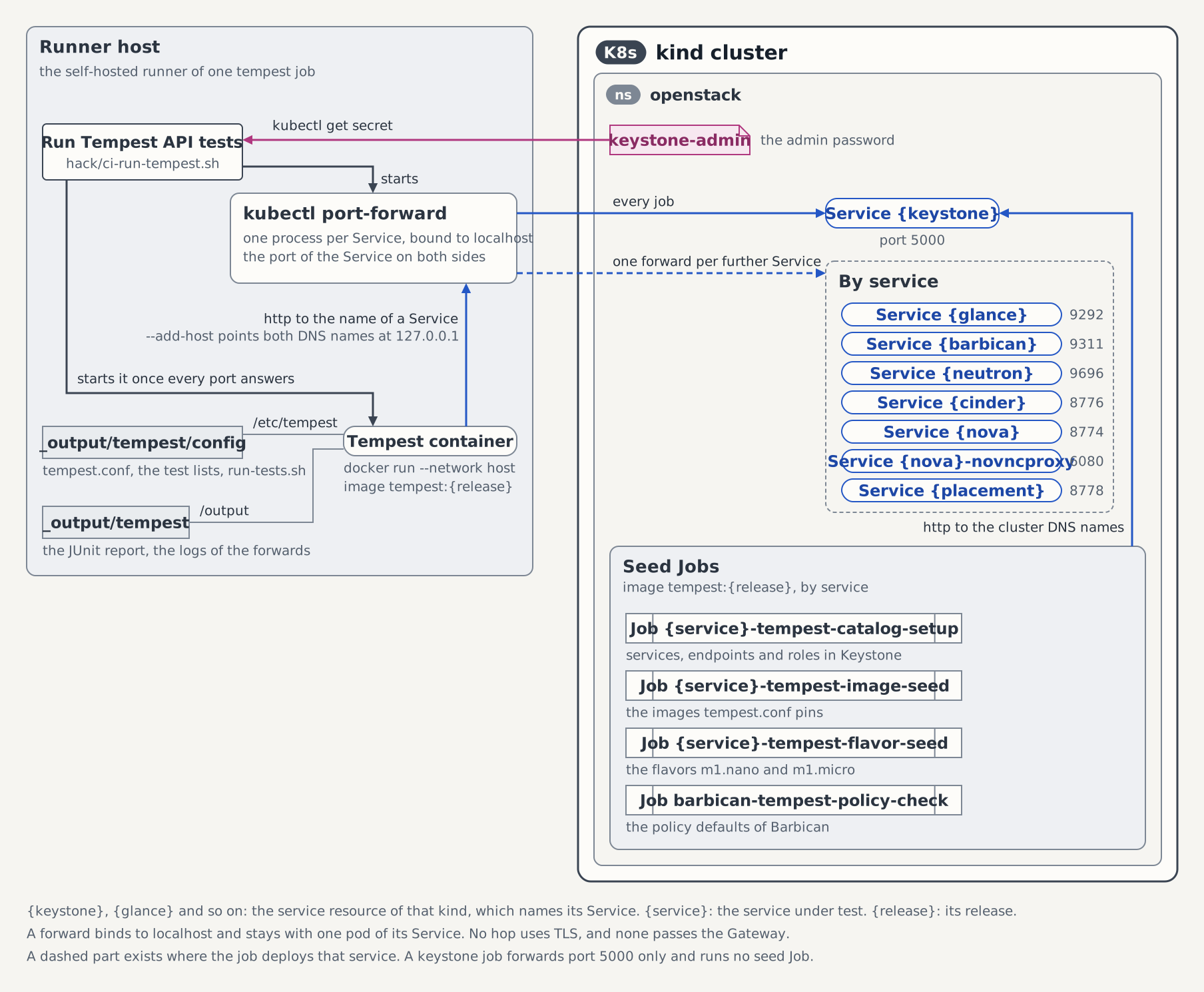
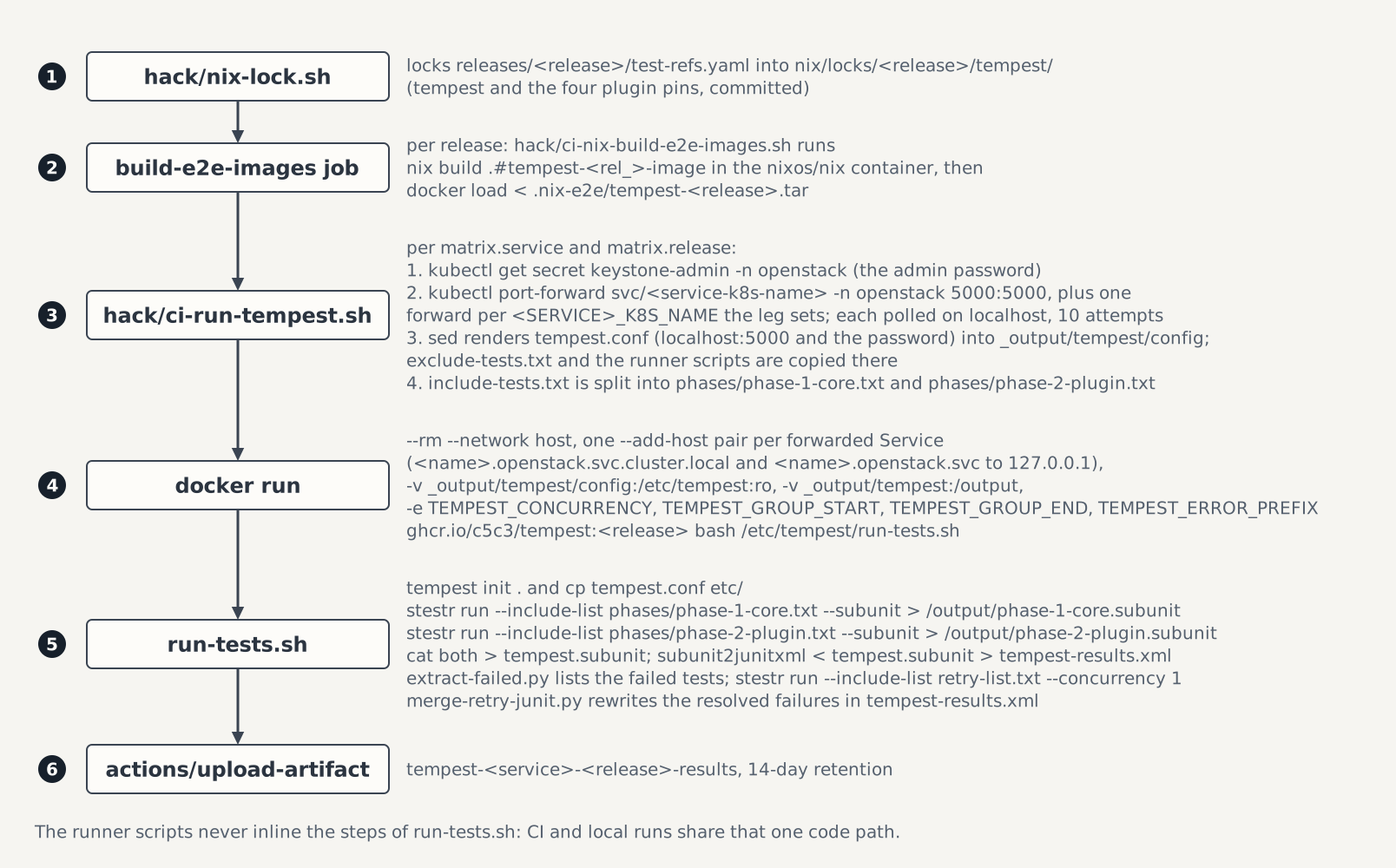
The figure shows where the parts of one job run: the Tempest container on the runner host, the port-forwards and host aliases that take it to the Services, and the seed Jobs inside the cluster. The second figure lists the commands in the order the job runs them.
Dependencies on Prior Features
| Artifact | Used by Tempest infrastructure |
|---|---|
images/tempest/image.nix, nix/lib/service-image.nix | The Nix expression of the Tempest image |
nix/locks/<release>/tempest/ | The lock the image's environment is built from |
releases/<release>/upper-constraints.txt | Dependency constraints of the lock |
tests/lib/assertions.sh | Assertion helpers sourced by verify_tempest.sh |
SBOM attestation pattern in build-images.yaml | Reused by merge-tempest-image for Tempest SBOM |
Cosign signing pattern in build-images.yaml | Reused by merge-tempest-image for Tempest signing |
OCI labels of nix/lib/service-image.nix | The four static labels plus the tempest version |
Grype scanning pattern in build-images.yaml | Reused by build-tempest and merge-tempest-image |