Architecture
CobaltCore (C5C3) is a Kubernetes-native OpenStack distribution for operating Hosted Control Planes. Its design originates in the C5C3 architecture document, an early-concept sketch of the full multi-cluster system. This page describes the architecture as this repository implements it, and the implementation is authoritative where the two differ. Building blocks from the original document that have no implementation yet are collected as sketches in the Future section.
The component-by-component catalog, with CRDs and API groups, is on Core Components.
Implemented topology
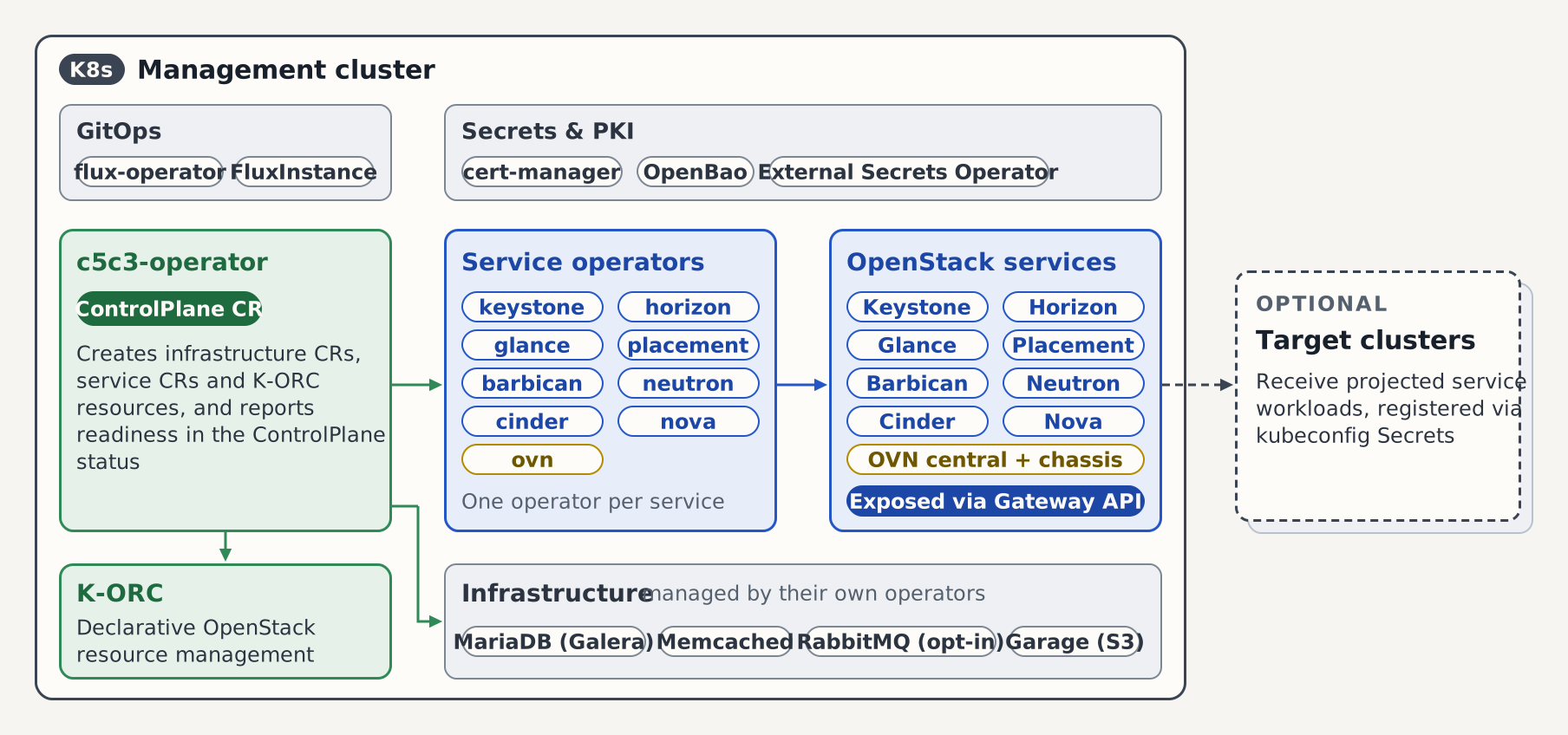
Everything runs on one management cluster. FluxCD applies the declarative infrastructure stack, the operators come up in dependency order, and a single ControlPlane resource then drives a complete OpenStack control plane. Service workloads either stay on the management cluster or land on registered target clusters.
Layering
The stack is built in three declarative layers.
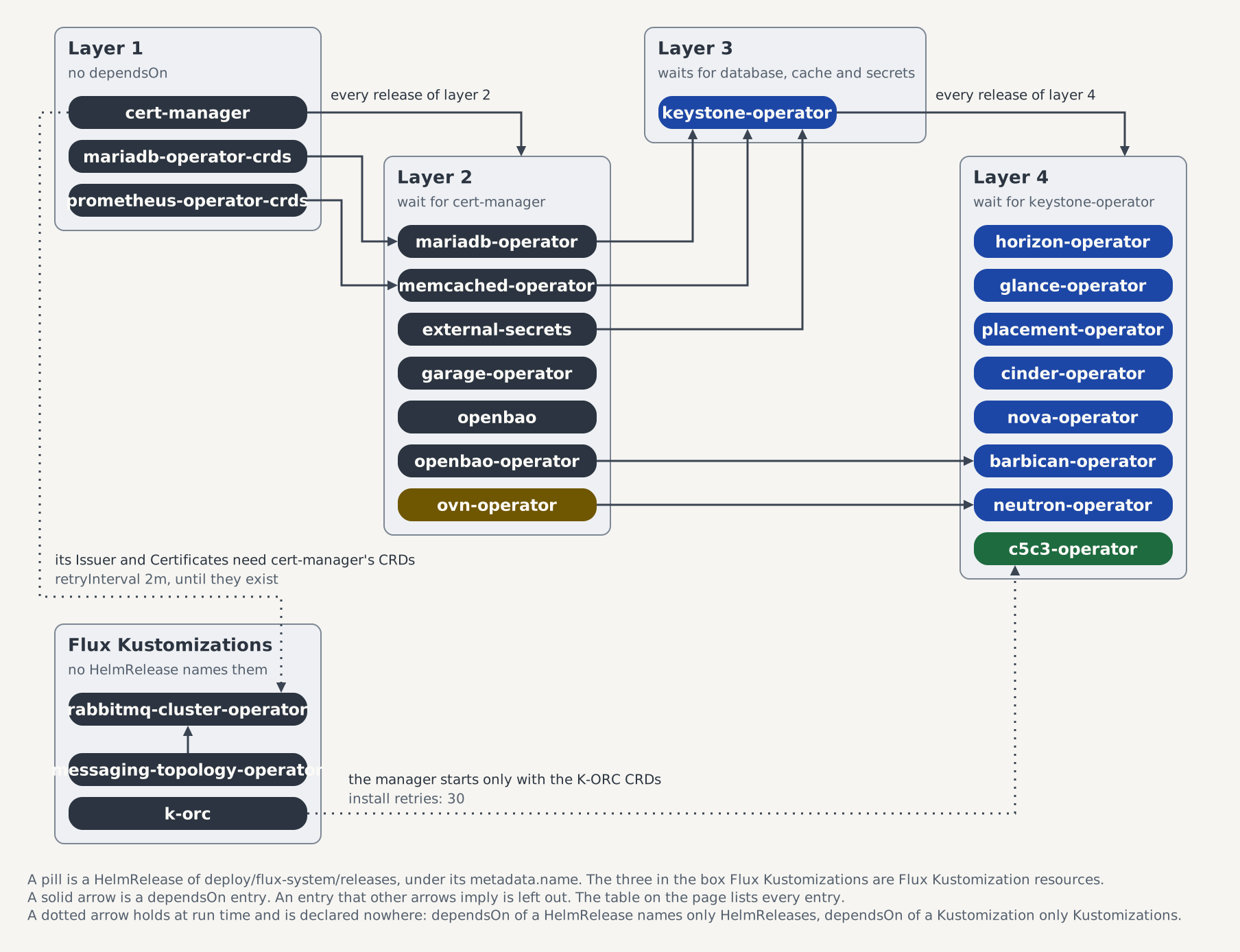
Infrastructure manifests (deploy/flux-system/). A FluxInstance installs the Flux controllers, and HelmReleases install cert-manager, the External Secrets Operator, OpenBao, and the infrastructure and service operators along an explicit dependsOn graph; K-ORC and the RabbitMQ Cluster Operator are applied by Flux Kustomizations of their own. The full stack, its namespaces, and the dependency order are documented in Infrastructure Manifests.
The figure draws that graph: four layers of HelmReleases, and the two dependencies that cross to a Flux Kustomization and are declared nowhere. Dependency Order lists every dependsOn entry.
Service operators (operators/). One operator per OpenStack service, each projecting the service's Deployments, Jobs, configuration, and Secrets from its CR. The Keystone operator is the reference implementation that sets the patterns — CRD layout, sub-reconciler chain, webhooks, finalizers, instrumentation — and Horizon, Glance, Placement, Barbican, Neutron, Cinder, and Nova are onboarded on the same scaffolding (Adding a New Operator). The OVN operator is the exception to the one-operator-per-service rule: it runs no OpenStack service of its own, only the OVN and Open vSwitch layer that the Neutron ML2/OVN driver programs.
Orchestration (operators/c5c3/). The c5c3-operator turns one ControlPlane CR into a running control plane: it creates the MariaDB, Memcached, and RabbitMQ CRs, projects the service CRs, mints the admin application credential through K-ORC, stewards the service-catalog entries, and aggregates readiness into the ControlPlane status. The OVN control plane stays outside it: the network service names an existing OVNCentral, which the c5c3-operator reads but never creates. Nova is projected through services.nova; the compute nodes that join it are the follow-on #1013. See ControlPlane Reconciler Architecture.
Secret flow
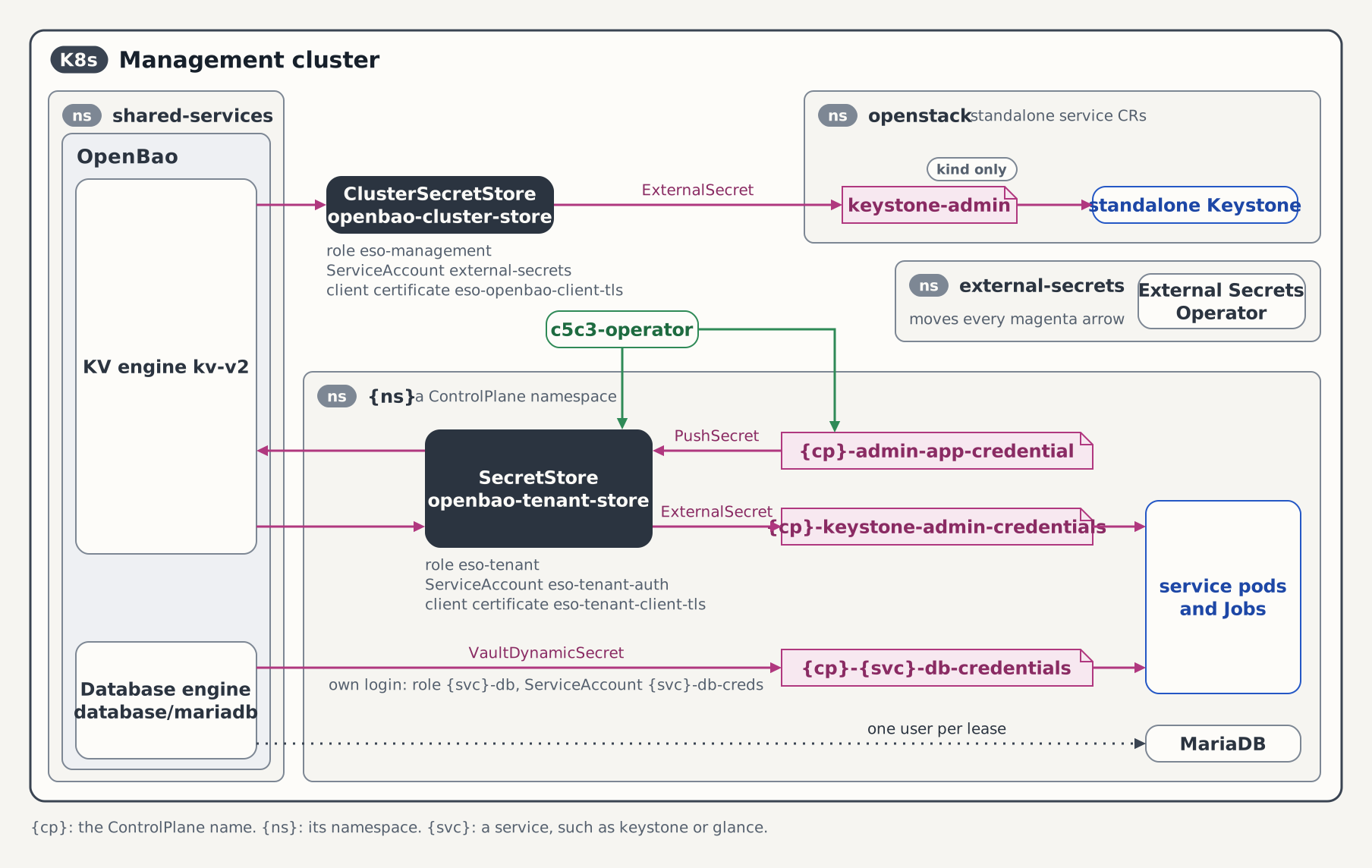
OpenBao is the source of truth for credentials, and ESO moves them in both directions: ExternalSecret resources deliver admin and database credentials to the services, PushSecret resources write operator-generated secrets back to OpenBao. Every ControlPlane reaches OpenBao through a tenant store of its own, which the c5c3-operator provisions in the ControlPlane namespace. A shared cluster store serves standalone service CRs. The credentials of a ControlPlane's managed database are by default issued per lease by OpenBao's database engine. The bootstrap sequence and the credential chain are documented in OpenBao Bootstrap and Infrastructure Manifests.
The figure shows the three paths and the store each one uses.
Service exposure
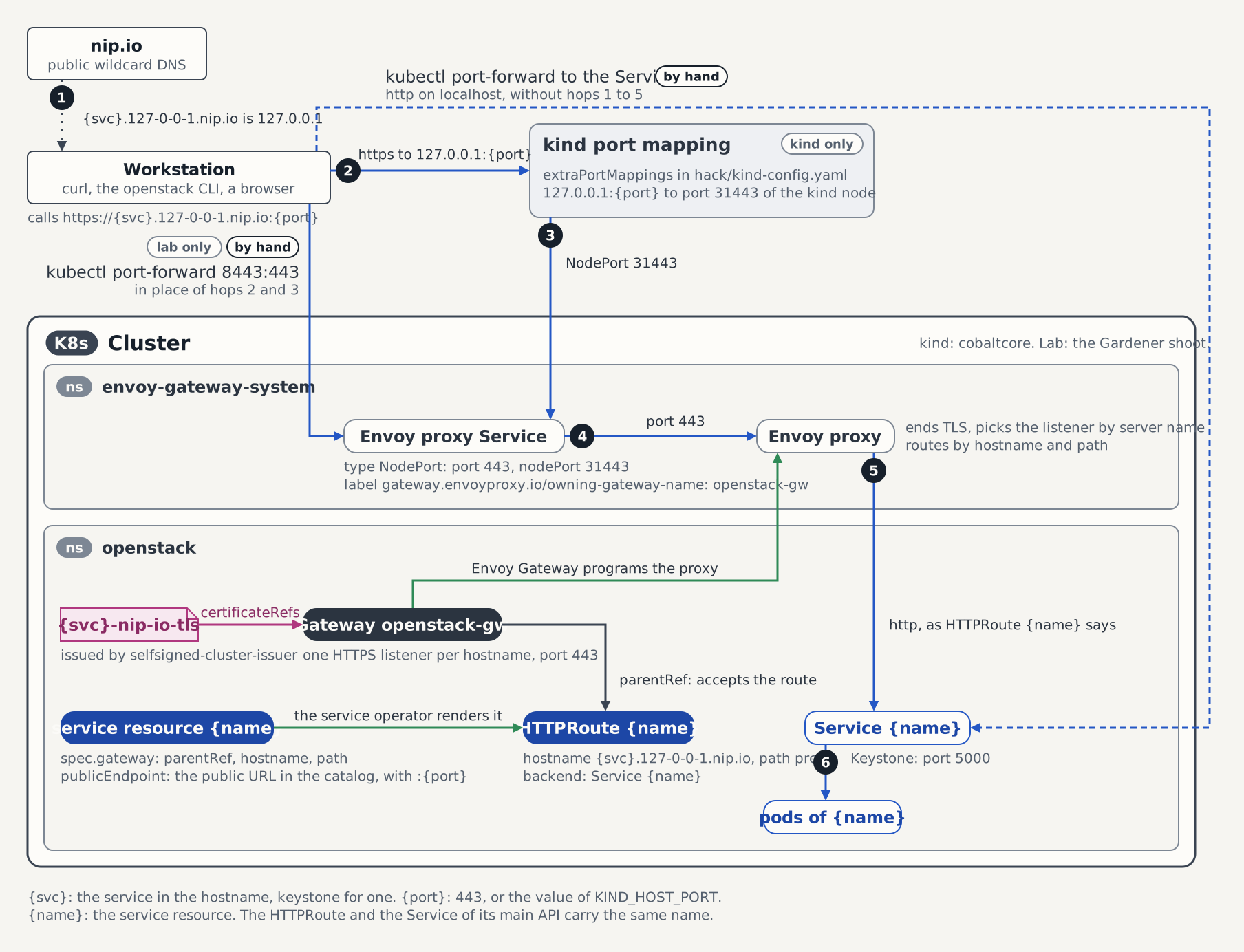
Service CRs opt into external exposure through the Gateway API: when spec.gateway is set, the operator renders an HTTPRoute for the configured public endpoint. The kind overlay installs Envoy Gateway as the demo implementation; production overlays do not ship a Gateway controller, and platform owners bring their own implementation.
The figure follows a request on the kind devstack. What spec.gateway configures is the part inside the cluster, from the Gateway to the pods, and the port mapping in front of it exists on kind only. The request path, hop by hop names each hop.
Multi-cluster placement
The implemented multi-cluster model is management cluster plus target clusters. A target cluster is registered by a kubeconfig Secret, and the workload CRDs of every service operator carry an optional spec.targetClusterRef that sends every projected child there while the CR itself stays on the management cluster. The ControlPlane carries one ref per service, so a single control plane can spread its services across clusters. See Target Clusters and the Deploy to a Target Cluster guide.
The multi-cluster target picture
The implemented topology is the starting point for a picture in which every role runs in a Kubernetes cluster of its own. Each layer of that picture comes from an open-source project of its own. IronCore provisions the servers, manages their lifecycle, and manages the switches. Garden Linux is the operating system on every node, and Gardener creates and manages the Kubernetes clusters through its IronCore provider extension. CobaltCore runs the OpenStack control planes on those clusters, with one ControlPlane resource per control plane, and OpenStack provides the VMs, the storage, and the network.

Laid out as clusters, the stack becomes five Kubernetes clusters. IronCore provisions every bare-metal node and manages it out of band (OOB), and Gardener creates and manages every cluster.
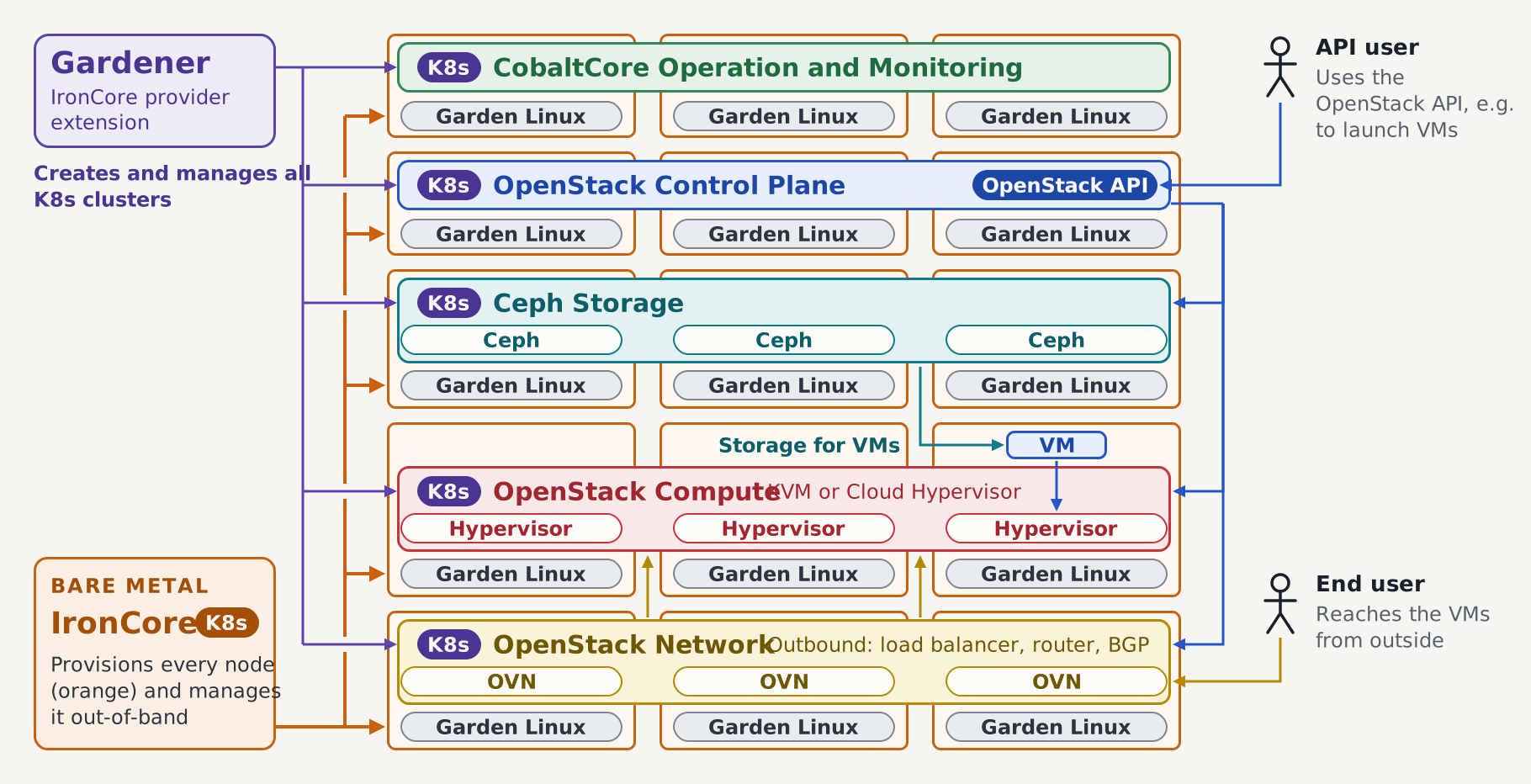
The OpenStack Control Plane cluster serves the OpenStack API, which API users call to launch VMs, and connects to the storage, compute, and network clusters. A VM runs on a hypervisor of the OpenStack Compute cluster, KVM or Cloud Hypervisor, and keeps its disks on the Ceph Storage cluster. The OpenStack Network cluster runs OVN and the outbound path (load balancer, router, BGP) through which end users reach the VMs. CobaltCore Operation and Monitoring operates and observes the other clusters.
Several control planes
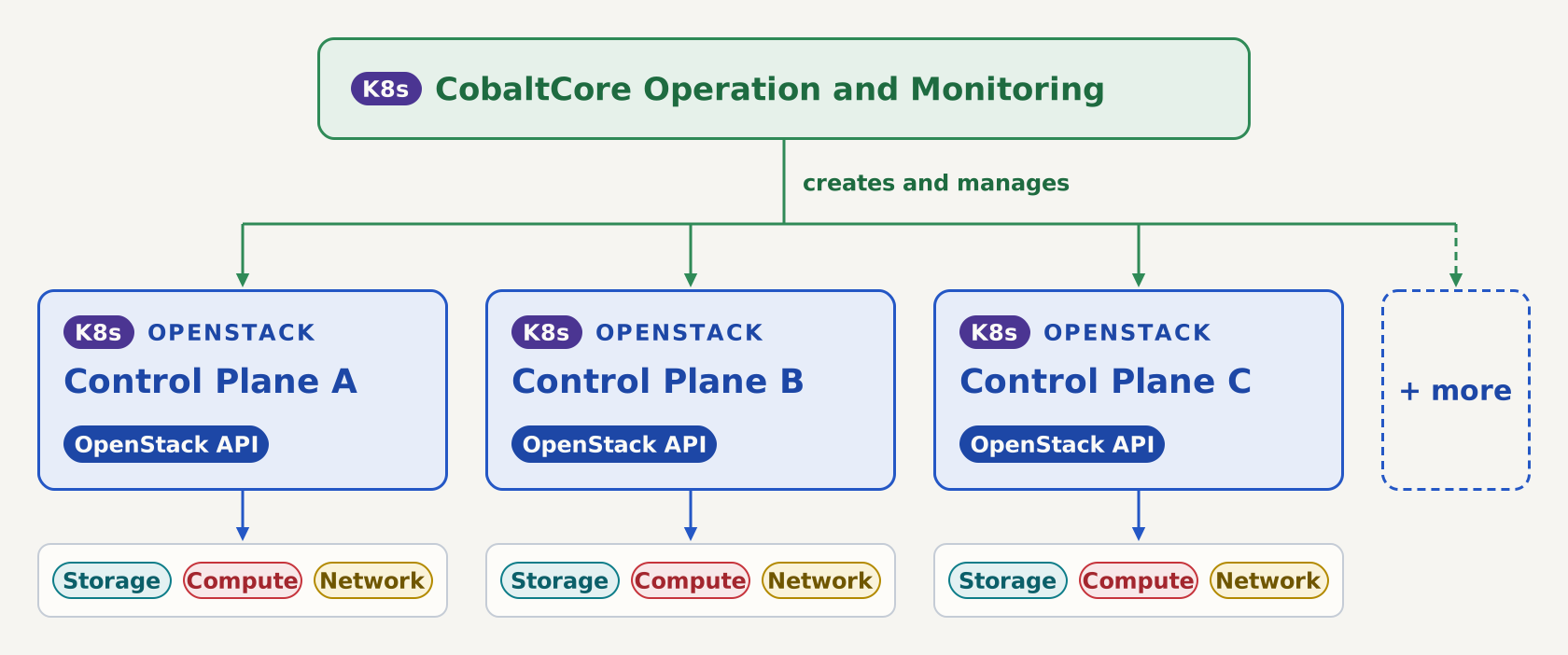
One Operation and Monitoring cluster creates and manages several OpenStack control planes. Each control plane is a cluster of its own, with its own OpenStack API and its own storage, compute, and network clusters.
Attached clusters
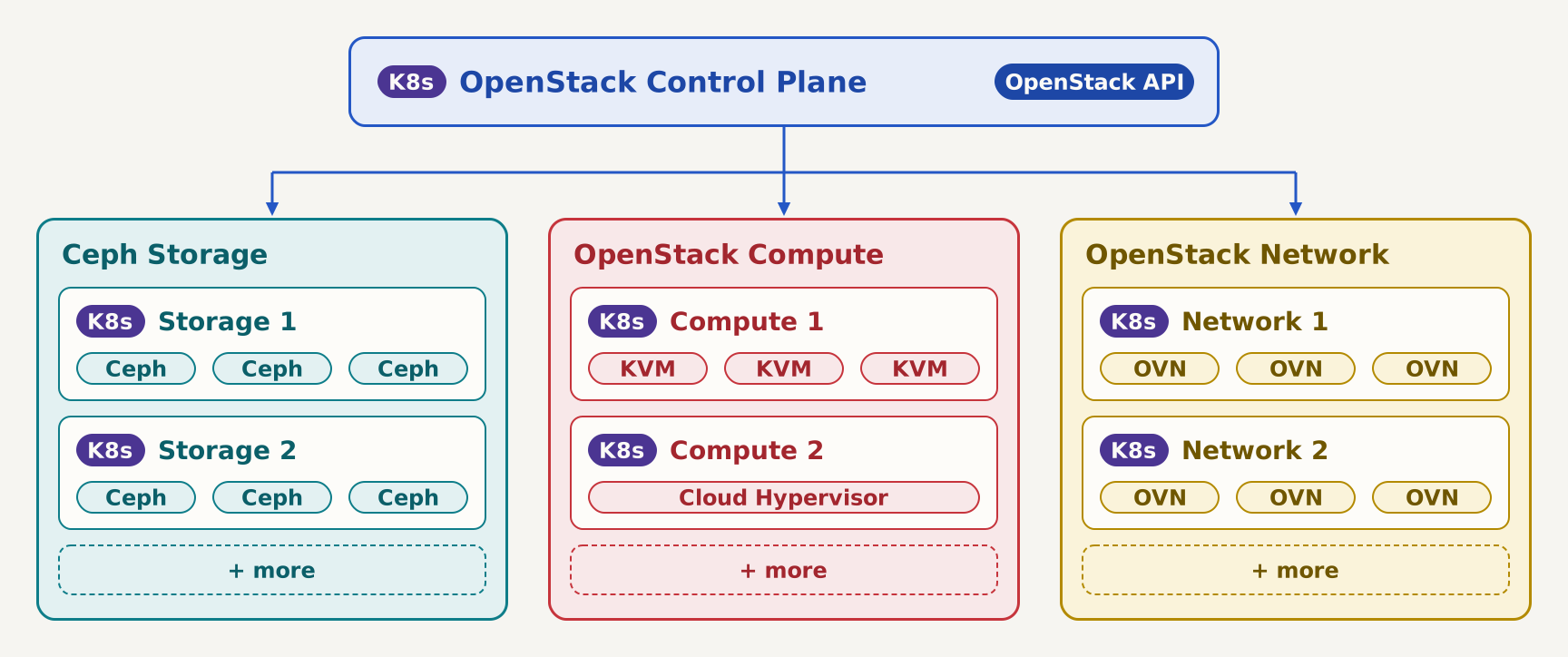
A control plane is not limited to one cluster per role. Several storage, compute, and network clusters attach to one control plane, and the compute clusters may run different hypervisors, KVM in one and Cloud Hypervisor in another.
State in this repository
The picture extends the four clusters of the original C5C3 document with a dedicated network cluster. The table maps each cluster to its counterpart in the original document and to the state in this repository:
| Cluster | Original document | Purpose | Status here |
|---|---|---|---|
| CobaltCore Operation and Monitoring | Management | GitOps hub, OpenBao, ESO, observability UI (Greenhouse, Aurora) | Collapsed into the single management cluster above; a dedicated cluster is a sketch |
| OpenStack Control Plane | Control Plane | OpenStack control-plane services, K-ORC, infrastructure | Implemented as the management cluster, with optional target clusters for workload placement. Several control planes are several ControlPlane CRs on that cluster, at most one per namespace |
| OpenStack Compute | Hypervisor | Compute virtualization on bare metal (LibVirt, OVN, node agents) | The dedicated cluster is a sketch. The Nova control plane, the OVN chassis layer and NovaCompute node pools are onboarded, and the Quick Start (metal-stack) runs them on KVM inside one cluster. Attaching a separate compute cluster is tracked in #1013 |
| Ceph Storage | Storage | Ceph via Rook, storage observability | Sketch; block storage itself is onboarded as the Cinder control-plane service on the management cluster |
| OpenStack Network | None; the original runs the OVN operator on the control-plane cluster and ovn-controller on the hypervisors | OVN and the outbound path: load balancer, router, BGP | No dedicated cluster. The OVN chassis layer runs on labelled nodes, and the openstack.c5c3.io/gateway label makes a node a network node (Label a Node as a Compute or Network Node) |
The draw.io sources of the diagrams on this page are in docs/diagrams/, beside the SVG files, and Architecture Diagrams describes how to change them.
Services not onboarded yet
Beyond the clusters, the original document scopes services that are not onboarded yet: Valkey infrastructure, the optional Cortex scheduler and Tempest operator, and consumer self-service via Crossplane. The Nova operator, which the document pairs with Valkey, is onboarded on MariaDB, Memcached, and RabbitMQ instead. Tempest exists in this repository as a container image driven by the e2e test infrastructure, not as an operator. New services follow the onboarding path in Adding a New Operator.