How-to: Label a Node as a Compute or Network Node
An OVNChassis puts the Open vSwitch and ovn-controller DaemonSets on the nodes its selector matches and registers each of them as a chassis with the OVNCentral it names. Two node labels decide which nodes those are: openstack.c5c3.io/chassis makes a node run the datapath, and openstack.c5c3.io/gateway promotes one of those nodes to a network node that announces enable-chassis-as-gw and can host a distributed router's gateway port.
This guide labels the node of the ControlPlane devstack, applies an OVNChassis against the controlplane-ovn central that devstack creates, and reads the registration back out of the node's own Open vSwitch database.
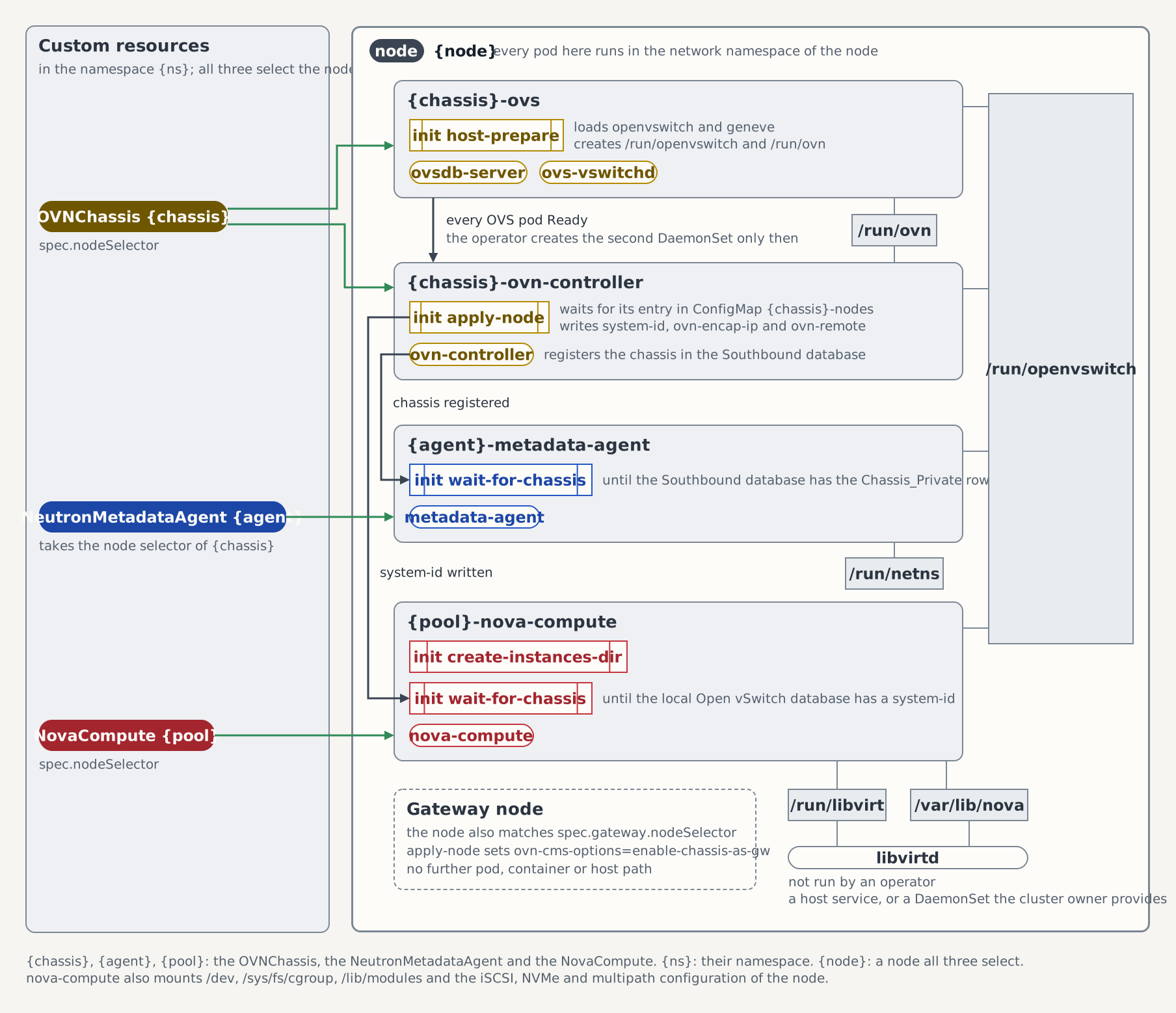
The figure shows what a labelled node runs once a metadata agent and a compute pool select it as well. This guide builds the two pods at the top; {chassis} is controlplane-chassis and {ns} is openstack here.
Prerequisites
Devstack
This guide is written against the Quick Start (ControlPlane) devstack. Stand it up first:
KIND_HOST_PORT=8443 WITH_CONTROLPLANE=true WITH_OVN_KERNEL_MODULES=true make deploy-infraFollow that tutorial through to the Create a first network check in its Step 7, so the OVNCentral controlplane-ovn is Ready in the openstack namespace and the ControlPlane controlplane serves the network API.
- A Linux host with root or passwordless sudo.
WITH_OVN_KERNEL_MODULES=trueloads theopenvswitchandgenevemodules on the host (hack/deploy-infra.sh). On a non-Linux host the script skips the load and says so, because the datapath runs in the kind provider's Linux VM kernel; on a Linux host without passwordless sudo it warns and skips. Either way the privilegedhost-prepareinit container of the chassis pods is left to find the modules in the node's/lib/modulestree, and a node that carries neither leaves the chassis pod inInit:CrashLoopBackOff. - The
ovn-operatorin namespaceovn-system, which the ControlPlane bring-up deploys.
Steps
1. Label the node
The devstack cluster has one node, so read its name once and keep it:
NODE="$(kubectl get nodes -o jsonpath='{.items[0].metadata.name}')"
kubectl label node "$NODE" openstack.c5c3.io/chassis=true
On a larger cluster, repeat the label for every node that should carry the datapath. The CRD fixes no label keys; openstack.c5c3.io/chassis and openstack.c5c3.io/gateway are the keys the e2e suites and these guides use. The operator never writes a Node: its RBAC on nodes is get, list and watch, so the labels stay yours.
2. Apply the OVNChassis
# controlplane-chassis.yaml
apiVersion: ovn.openstack.c5c3.io/v1alpha1
kind: OVNChassis
metadata:
  name: controlplane-chassis
  namespace: openstack
spec:
  centralRef:
    name: controlplane-ovn
  nodeSelector:
    openstack.c5c3.io/chassis: "true"
  gateway:
    nodeSelector:
openstack.c5c3.io/gateway: "true"kubectl apply -f controlplane-chassis.yaml
kubectl wait ovnchassis/controlplane-chassis -n openstack \
--for=condition=Ready --timeout=10mNothing projects an OVNChassis: the ControlPlane references an OVNCentral and stops there, so this CR is yours to edit and no reconcile takes your changes back. spec.centralRef and spec.nodeSelector name the central and the nodes; spec.gateway.nodeSelector narrows that same set, and it matches no node until Step 3 puts the second label on one. The manifest carries no spec.bridgeMappings, because a kind node has no provider network to map.
Ready aggregates six sub-conditions. Read them when the wait times out:
kubectl get ovnchassis controlplane-chassis -n openstack \
  -o jsonpath='{range .status.conditions[*]}{.type}={.status} {.reason}{"\n"}{end}'
3. Promote the node to a network node
A node with the chassis label alone is a compute node: it forwards the traffic of the workloads on it and announces no gateway role. Add the second label to make it a network node:
kubectl label node "$NODE" openstack.c5c3.io/gateway=trueThree things follow. The node's entry in the controlplane-chassis-nodes ConfigMap is re-rendered with GATEWAY=true, so its hash no longer matches status.nodes[].configHash and the operator runs a controlplane-chassis-apply-<8 hex> Job pinned to that node. The Job re-runs the same apply-node.sh the pod's init container runs, which sets ovn-cms-options=enable-chassis-as-gw in the local Open_vSwitch table. Once it has landed, status.nodes[].gateway reports true.
Taking the label off again is an evacuation, with a Job of its own: Drain a Chassis Node walks it.
Verification
The per-node registration record carries the chassis identity:
kubectl get ovnchassis controlplane-chassis -n openstack \
  -o jsonpath='{.status.nodes}'
Expect one entry per labelled node, with systemID holding a UUID and gateway: true on the promoted one. gateway carries omitempty, so a compute node prints no key rather than false. The systemID is what the chassis-deletion Job addresses later, so a node without one is a registration nothing could remove.
Both DaemonSets run on the selected nodes:
kubectl get ds -n openstack \
  controlplane-chassis-ovs controlplane-chassis-ovn-controller
DESIRED and READY should equal the number of labelled nodes on both. The counters on the CR (status.desiredNumberScheduled, status.numberReady) are mirrored from the ovn-controller DaemonSet alone: that daemon is what makes a node a chassis, and a node running Open vSwitch without it carries no logical flows.
Finally, read the values the node applied to its own database:
kubectl exec ds/controlplane-chassis-ovs -n openstack -c ovsdb-server -- \
  ovs-vsctl get open . external_ids
The output holds system-id matching status.nodes[].systemID, hostname with the node name, ovn-encap-type=geneve with the node address in ovn-encap-ip, ovn-remote pointing at the Southbound address controlplane-ovn published, and ovn-cms-options=enable-chassis-as-gw on a gateway node. A compute node carries no ovn-cms-options key at all.
See also
- OVNChassis CRD: the node contract, the full
external_idstable, and the three maintenance Jobs. - OVN Reconciler Architecture: which sub-reconciler owns which condition, and what each Job is triggered by.
- Target Clusters: running the chassis layer on a cluster other than the management one.
Tested by
The flow above mirrors the following end-to-end suite, which labels the node, applies a chassis, and probes the Southbound database for the registration and its Geneve tunnel endpoint:
chainsaw test --test-dir tests/e2e/ovn/chassis-single-nodeThe OVNChassis the suite applies
The suite shares the openstack namespace with every other OVN suite, so its CRs are isolation-named (ovn-chassis against the central ovn-chassis-central) where the walkthrough above uses the controlplane-chassis and controlplane-ovn names the devstack produces. It also declares no spec.gateway: a kind node has no uplink, and a gateway chassis without one would announce connectivity it does not have.
apiVersion: ovn.openstack.c5c3.io/v1alpha1
kind: OVNChassis
metadata:
  name: ovn-chassis
  namespace: openstack
spec:
  centralRef:
    name: ovn-chassis-central
  nodeSelector:
    openstack.c5c3.io/chassis: "true"