How-to: Drain a Chassis Node
Taking a node out of an OVNChassis is two label removals in a fixed order, and the operator answers each with a per-node Job. Removing openstack.c5c3.io/gateway moves the gateway bindings off the node; removing openstack.c5c3.io/chassis afterwards deletes its registration from the Southbound database and drops it out of status.nodes.
The order is what keeps the model consistent. An entry marked as leaving is only ever handed to the chassis-deletion Job, so a node that loses the chassis label first never runs an evacuation, and the gateway bindings stay pointed at a chassis that is on its way out.
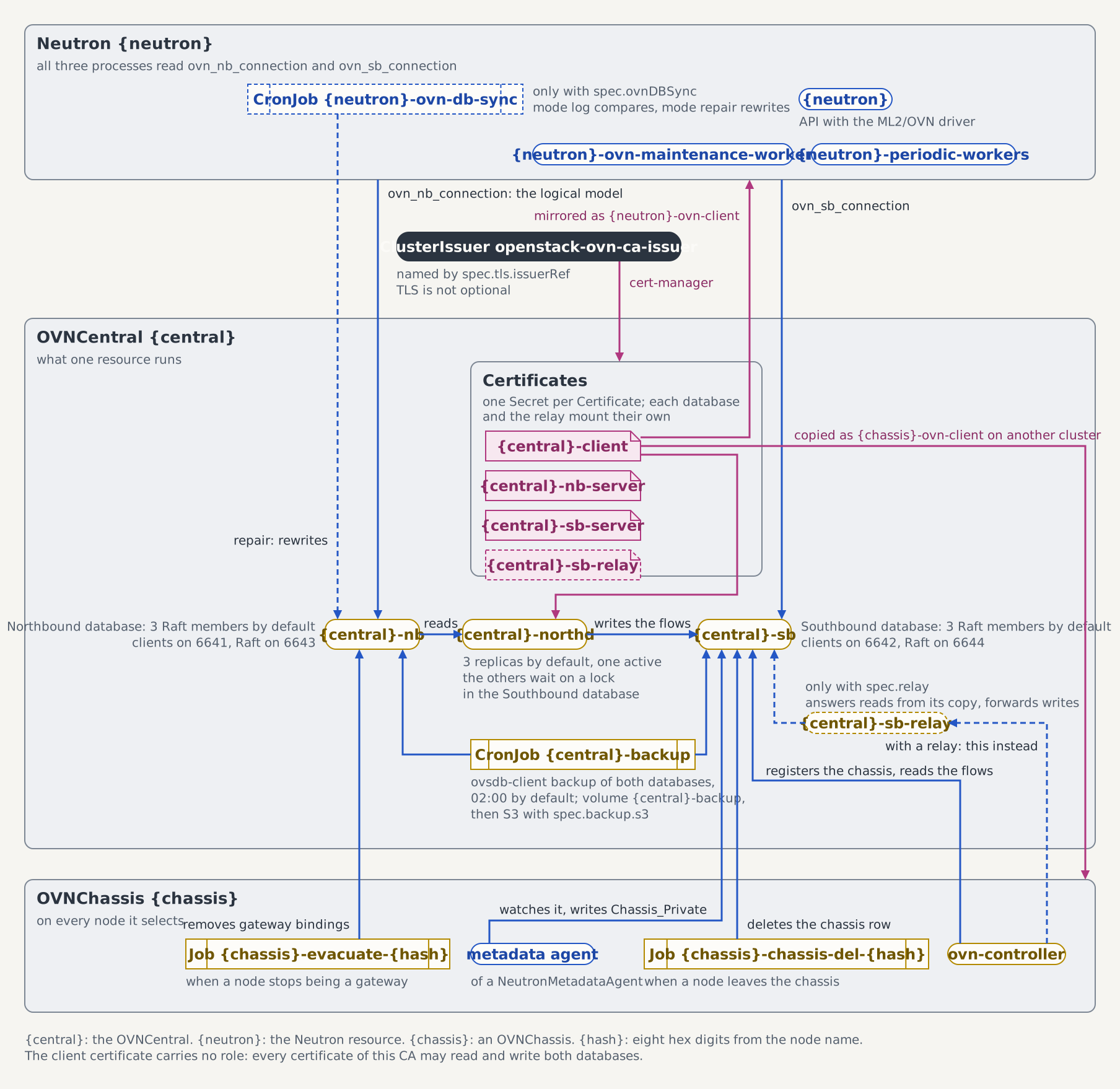
The figure shows the two databases the Jobs of this guide write to: the evacuation removes gateway bindings from the Northbound database, and the chassis deletion removes the registration from the Southbound database.
Prerequisites
Devstack
This guide is written against the Quick Start (ControlPlane) devstack. Stand it up first:
KIND_HOST_PORT=8443 WITH_CONTROLPLANE=true WITH_OVN_KERNEL_MODULES=true make deploy-infraFollow that tutorial through to the Create a first network check in its Step 7, so the OVNCentral controlplane-ovn is Ready in the openstack namespace and the ControlPlane controlplane serves the network API.
- A node labelled and registered as in Label a Node as a Compute or Network Node: the
OVNChassiscontrolplane-chassisisReady, the node carries bothopenstack.c5c3.io/chassis=trueandopenstack.c5c3.io/gateway=true, andstatus.nodes[].gatewayreportstruefor it. - The same Linux host requirement that guide names: the chassis pods have to be running for the
applyJob to reach the node.
Steps
The maintenance Jobs are named after the node, hashed: {chassis}-<kind>-<8 hex>, where the eight characters are the first four bytes of the SHA-256 of the node name. A node name is a DNS subdomain of up to 253 characters and a Job name has 63, which is why the name is hashed. Compute the suffix once so the kubectl wait calls below can address a Job by name:
NODE="$(kubectl get nodes -l openstack.c5c3.io/chassis=true -o jsonpath='{.items[0].metadata.name}')"
HASH="$(printf '%s' "$NODE" | sha256sum | cut -c1-8)"   # shasum -a 256 on macOS
echo "$NODE -> $HASH"
1. Take the gateway role away
kubectl label node "$NODE" openstack.c5c3.io/gateway-Two Jobs run, in this order:
kubectl wait --for=condition=complete -n openstack \
  "job/controlplane-chassis-apply-${HASH}" --timeout=5m
kubectl wait --for=condition=complete -n openstack \
  "job/controlplane-chassis-evacuate-${HASH}" --timeout=5m
The apply Job re-applies the node's values, which now carry GATEWAY=false, so the chassis stops announcing enable-chassis-as-gw. Only then does the evacuate Job collect the Gateway_Chassis and HA_Chassis rows that name this chassis and drop them out of the logical router ports and HA groups holding them, in one ovn-nbctl call against the Northbound database. Running it the other way round would have the model hand the bindings straight back to a node that still claims the role. The Job then asks the Northbound what still names the chassis and fails when a row survives, so gatewayEvacuated only ever records a drain the database confirmed.
kubectl wait fails outright on a Job that has not been created yet, so poll for its existence first if you run this immediately after the label change: the operator renders the Job on the pass that observes the change.
The drain has landed when the evacuation's finding reaches the status:
kubectl get ovnchassis controlplane-chassis -n openstack \
  -o jsonpath='{.status.nodes[0].gatewayEvacuated} {.status.nodes[0].gateway}'
Expect true followed by an empty string. status.nodes[].gateway reports what the node last applied, and it is held at true until the evacuation succeeds, so the pair flipping together is what says the drain finished rather than that the label vanished. Re-adding the label resets gatewayEvacuated, so a re-promoted node is not treated as still drained.
2. Take the chassis role away
kubectl label node "$NODE" openstack.c5c3.io/chassis-The node stops matching spec.nodeSelector, and its entry survives, re-rendered:
kubectl get configmap controlplane-chassis-nodes -n openstack \
  -o jsonpath="{.data['$NODE']}"
The entry now ends in LEAVING=true. The Southbound registration outlives the selection, so the SYSTEM_ID that has to be deregistered has to outlive it too. That is what the third Job addresses:
kubectl wait --for=condition=complete -n openstack \
  "job/controlplane-chassis-chassis-del-${HASH}" --timeout=5m
Once it succeeds the operator forgets the node in both places at once, the ConfigMap key and the status entry:
kubectl get ovnchassis controlplane-chassis -n openstack \
  -o jsonpath='{.status.nodes} {.status.desiredNumberScheduled}'
kubectl get ovnchassis controlplane-chassis -n openstack \
  -o jsonpath='{.status.conditions[?(@.type=="MaintenanceReady")].reason}'
status.nodes comes back empty, the counter reads 0, and MaintenanceReady settles on MaintenanceIdle. A Job still in flight reports MaintenanceRunning, which is also True: a rolling drain is not an outage, so the aggregate Ready is not held down for it.
What keeps forwarding meanwhile
Dropping the chassis label takes the node out of both DaemonSets, so its pods are terminated while the workloads on it are still sending packets. The preStop hooks are written for that moment. ovsdb-server and ovs-vswitchd run ovs-appctl -t /run/openvswitch/ovsdb-server.ctl exit and ovs-appctl -t /run/openvswitch/ovs-vswitchd.ctl exit, neither with --cleanup: that flag tears the kernel datapath down, and the node would stop forwarding until a replacement pod started. ovn-controller runs ovn-appctl -t /run/ovn/ovn-controller.ctl exit --restart, which leaves the datapath flows in place and keeps the Southbound Chassis row for a successor pod to adopt, with no re-registration. The traffic on the node therefore keeps flowing on the kernel datapath the departed pods left behind, until the chassis-del Job removes the row.
When a maintenance Job fails
A Job that exhausts its budget (each runs with backoffLimit: 0, a 300-second active deadline) is reported on the CR and raised as an event:
kubectl get events -n openstack --field-selector reason=ChassisMaintenanceJobFailed
kubectl logs -n openstack "job/controlplane-chassis-evacuate-${HASH}"
MaintenanceReady goes False with reason MaintenanceJobFailed and a message naming the kind, the Job and the node. No error is returned to the workqueue: a rerun under an unchanged key produces the same failure, so the operator stops and waits for you. Fix the cause the pod logs name, usually an unreachable database address or a Northbound row the evacuation could not remove, then delete the failed Job:
kubectl delete job -n openstack "controlplane-chassis-evacuate-${HASH}"The controller watches the Jobs it owns, so the delete wakes it, the maintenance step finds no Job under that name, and it creates a fresh one.
Deleting the CR is not a drain
kubectl delete ovnchassis controlplane-chassis removes the configuration of a node, not the node itself. The DaemonSet pods go, and with them ovn-controller, while the Southbound Chassis rows they registered stay behind, the way deleting a Deployment leaves the rows its pods wrote. A stale row keeps claiming the ports of workloads that have moved elsewhere. Drop the nodes out of spec.nodeSelector and let the chassis-del Jobs run, as above, before deleting the CR.
See also
- OVNChassis CRD:
status.nodes, the Job naming convention, and the per-nodeexternal_ids. - OVN Controller Events: the events both controllers emit and the field selectors to watch them with.
- OVN Reconciler Architecture: the three triggers the maintenance step compares, and its condition contract.
Tested by
The flow above mirrors the following end-to-end suite, which brings a gateway chassis up on the one kind node, removes each label in turn, and waits on the Jobs by their computed names. It seeds a logical router port bound to the chassis before the drain and reads both databases back afterwards, because gatewayEvacuated and the emptied status.nodes follow the Jobs' exit codes and both Jobs exit 0 on a database that holds nothing for the chassis:
chainsaw test --test-dir tests/e2e/ovn/chassis-drainThe OVNChassis the suite applies
The suite shares the openstack namespace with every other OVN suite, so its CRs are isolation-named (ovn-drain against the central ovn-drain-central) where the walkthrough above uses the controlplane-chassis and controlplane-ovn names the devstack produces. Both selectors are the ones this guide removes labels for.
apiVersion: ovn.openstack.c5c3.io/v1alpha1
kind: OVNChassis
metadata:
  name: ovn-drain
  namespace: openstack
spec:
  centralRef:
    name: ovn-drain-central
  nodeSelector:
    openstack.c5c3.io/chassis: "true"
  gateway:
    nodeSelector:
      openstack.c5c3.io/gateway: "true"