MariaDBDatabase Reconciler Architecture
Reference documentation for the MariaDBDatabaseReconciler. It owns the MariaDBDatabase lifecycle and is the single writer of its status: the teardown finalizer, the OpenBao database-engine role, the mariadb-operator Database CR, the ESO generator and ExternalSecret that issue the credential, the Secret delivered beside the order, and the DatabaseReady / DeliveryReady / Ready conditions.
Like the Keystone order reconcilers it serves orders on the management cluster and on target clusters. A request carries the cluster the order was seen on, and the reconciler reads and writes the order, its status, its finalizer and its delivered Secret through that cluster's client. The generator and the ExternalSecret live in the ControlPlane's namespace on the management cluster, and the Database CR beside the MariaDB in Keystone's namespace on Keystone's cluster.
It is the one reconciler in the c5c3-operator with an OpenBao client of its own (internal/common/openbao). It logs in on the kubernetes/management auth mount as the c5c3-operator role with its pod's ServiceAccount token and the shared client certificate of the ControlPlane's namespace, writes and deletes the order roles, revokes their leases, and revokes its own token after each use. Its c5c3-operator policy reaches nothing under database/mariadb/config, so the MariaDB root password stays with the onboarding script. See OpenBao Bootstrap.
It records no Events, for the reason the KeystoneUser reconciler gives.
Controller Registration
if err := (&controller.MariaDBDatabaseReconciler{
    Client:                  mgr.GetClient(),
    Scheme:                  mgr.GetScheme(),
    Resolver:                mcMgr,
    MaxConcurrentReconciles: opts.MaxConcurrentReconciles,
}).SetupWithManager(mcMgr); err != nil { ... }
Client is the management cluster's client and Resolver the multicluster manager. Two fields stay nil in production and are set by the tests: OpenBaoDial, which defaults to openbao.Login, and ServiceAccountToken, which defaults to reading /var/run/secrets/kubernetes.io/serviceaccount/token on every call, because the kubelet rotates the projected token in place.
The cluster-agnostic machinery (child naming and ownership, the admission gates, the pass result, the teardown and the label mapping) is the shared scaffold in keystoneorder.go. See The shared scaffold.
Before the watches it registers one field indexer on the local manager's indexer:
| Index | Key | Extractor |
|---|---|---|
MariaDBDatabaseControlPlaneRefIndexKey (spec.controlPlaneRef) | the resolved <namespace>/<name> of the reference | mariaDBDatabaseControlPlaneRefExtractor |
Watches
| Resource | Watch | Clusters | Effect |
|---|---|---|---|
MariaDBDatabase | For() | management, and every engaged target cluster that serves the kind | Filtered by watch.CRUpdatePredicate(). The request carries the event's cluster |
Secret | Owns() | the same | The delivered Secret beside the order. An edit or a deletion brings the order back with the event's cluster |
Secret, ESO ExternalSecret, ESO VaultDynamicSecret | Watches() | management | Mapped back to the order by the three ownership labels (orderChildRequests). The Secret ESO writes carries the labels through the ExternalSecret's target template, so each refresh brings the order back |
mariadb-operator Database | Watches() | management, and every engaged target cluster that serves the kind | Mapped back by the same labels (databaseChildRequests), but only from the namespace a ControlPlane places Keystone in, on the cluster it places it on. The Database lives on Keystone's cluster while its cluster label names the order's. A Database CR an owner writes in an assigned namespace wakes no order, whatever its labels |
ControlPlane | Watches() | management | Index-backed fan-out (controlPlaneToMariaDBDatabasesMapper) to the orders on the management cluster that reference it. Filtered by orderControlPlanePredicateFor(DBCredentialsReady): an update passes on a spec change, a deletion, or a flip of DBCredentialsReady |
No ControlPlane watch reaches an order on a target cluster. Such an order is reconciled again every 10 minutes (orderRefreshAfter), which is how a publishedDatabaseEndpoint edit reaches it.
RBAC
On the management cluster the ClusterRole gains the order verbs and the mariadb-operator's databases:
// +kubebuilder:rbac:groups=c5c3.io,resources=mariadbdatabases,verbs=get;list;watch;update;patch
// +kubebuilder:rbac:groups=c5c3.io,resources=mariadbdatabases/status,verbs=get;update;patch
// +kubebuilder:rbac:groups=c5c3.io,resources=mariadbdatabases/finalizers,verbs=update
// +kubebuilder:rbac:groups=k8s.mariadb.com,resources=databases,verbs=get;list;watch;create;update;patch;delete
The ServiceAccounts, Certificates, VaultDynamicSecrets, ExternalSecrets and Secrets it writes in the ControlPlane's namespace, and the ControlPlane and MariaDB reads, are granted by the ControlPlane's marker block.
On a target cluster the target-cluster-access chart grants the same order verbs and Secret write in each assigned namespace, and read on the kind in each placed namespace. A placed Keystone's namespace already grants databases. See Assigned namespaces.
Reconciliation Flow
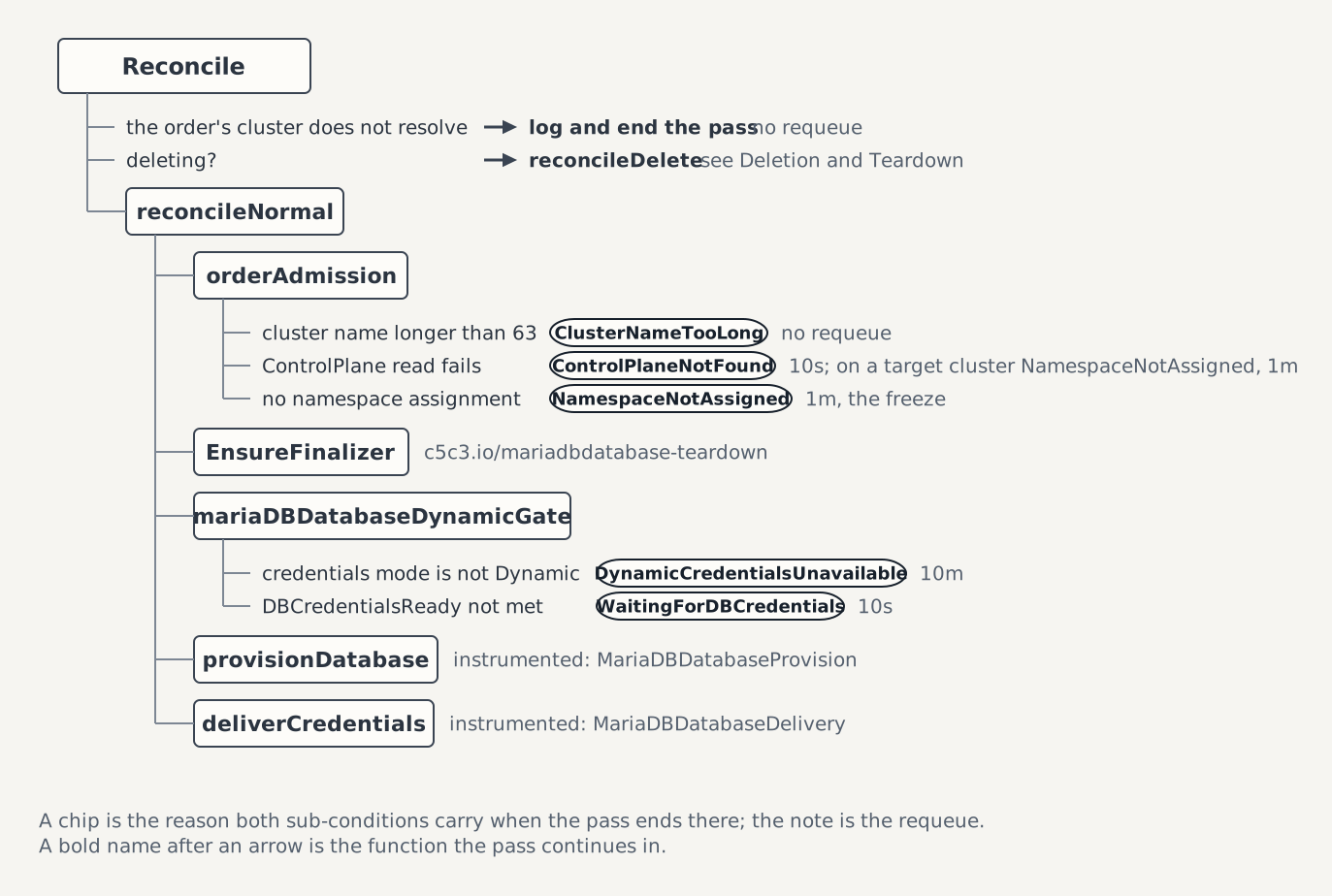
The assignment gate is the freeze: without an entry for the order's namespace on its cluster, both conditions read NamespaceNotAssigned and the pass returns before anything is read or written in the ControlPlane's namespace, in Keystone's namespace or in OpenBao. The finalizer is installed only past this gate.
The Dynamic gate decides with effectiveKeystoneDatabase and dbCredentialsDynamicEnabled, the functions the ControlPlane's own DB credential uses. Both refusals are written on both conditions and skip the two steps.
When the provision step has not converged, DeliveryReady reads WaitingForCredentials and the delivery is skipped. A delivered order on the management cluster then waits for an event; every other order comes back after 10 minutes.
Database provisioning
provisionDatabase writes DatabaseReady in seven steps:
- Keystone's cluster is resolved (
TargetClusterUnavailable), and the shared MariaDBeffectiveKeystoneDatabase(cp)in Keystone's namespace has to be Ready (ClusterNotReady). - The schema name
mariaDBDatabaseNameis checked: a name that is not a MySQL identifier of 1 to 64 characters from[A-Za-z0-9_]is refused withDatabaseNameInvalid, a MariaDB system schema withDatabaseNameReserved, and a Database CR on the same MariaDB whosespec.name(ormetadata.name) carries it and that the order did not create withDatabaseCollision. The collision message names the schema only, because the other Database CR may be another owner's order; the log linethe database an order names is taken on the shared MariaDBnames it undertakenBy. The list reads the cache without copying it. No refusal requeues. - The ServiceAccount
order-db-credsand the cert-manager Certificateorder-db-openbao-clientare applied in the ControlPlane's namespace, without labels and without an owner. Until cert-manager has writtentls.crt,tls.keyandca.crtinto the Secret of that name, the step reportsWaitingForClientCertificate. - The operator logs in on OpenBao with that keypair and its ServiceAccount token, at the server and mount of the ControlPlane's store, and reads the role
order.<ControlPlane namespace>.<prefix without the trailing dash>ondatabase/mariadb. When the role is absent or differs, it writes it:db_namekeystone-<keystone namespace>, oneCREATE USERand oneGRANT ALL PRIVILEGESon the schema with every_escaped as\_,DROP USER IF EXISTSon revocation,default_ttl48handmax_ttl72h. It revokes its own token before the step goes on. A failure writesOpenBaoError, prefixed with the three bootstrap scripts for a 403, and returns an error, so the pass backs off and counts inc5c3_operator_reconcile_errors_total.status.roleNameis set. - The Database CR
<prefix>databaseis applied in Keystone's namespace through that cluster's client, withmariaDbRef.waitForIt: trueand thecleanupPolicyspec.deletionPolicyselects (SkipforRetain,DeleteforDelete). It is applied on every pass, so a changed policy reaches the live CR. A live Database of that name the order did not create is refused withDatabaseCollision. Until the mariadb-operator reports it Ready, the step reportsWaitingForDatabase. - The
VaultDynamicSecretand the ExternalSecret<prefix>credentialsare applied in the ControlPlane's namespace. The generator readsdatabase/mariadb/creds/<role>as theorder-dbrole with the shared ServiceAccount and keypair; the ExternalSecret refreshes every 24 hours and sets the order's labels on the Secret ESO writes. Until ESO reports the ExternalSecret Ready and that Secret carries apasswordand a username with the engine'sv-prefix, the step reportsWaitingForCredentials. status.databaseNameis set andDatabaseReadyreadsDatabaseProvisioned.
The engine connection the role names is the onboarding script's. Its allowed_roles admits order.<ControlPlane namespace>.*, so until an existing deployment re-runs setup-database-tenant.sh the role write in step 4 fails.
Credential delivery
deliverCredentials writes DeliveryReady in six steps:
- The address is resolved for the order's cluster (
mariaDBDatabaseEndpoint): the in-cluster MariaDB Service on Keystone's cluster, the ControlPlane'sspec.infrastructure.publishedDatabaseEndpointelsewhere. Without one the step reportsDatabaseNotPublishedand writes nothing. A value that is nothost:portwith a port from 1 to 65535 reportsDeliveryError. - When the shared database's
tlsblock is enabled,ca.crtis read from its CA bundle Secret in Keystone's namespace (WaitingForCABundle). - The Secret ESO wrote,
<prefix>credentialsin the ControlPlane's namespace, has to carry ausernameand apassword(WaitingForCredentials). The ExternalSecret'sstatus.refreshTimeis read beside it. - A live Secret
<name>-credentialsbeside the order that the order does not control is refused (DeliveryRefused). On a target cluster that check reads the cluster's API server directly. - The
OpaqueSecret is applied beside the order withhost,port,database,username,passwordand, from step 2,ca.crt, the name and namespace labels, and a controller owner reference to the order. - Once the apply response carries the current
usernameandpassword,status.host,status.port,status.credentialsRefreshedAt,status.secretNameandstatus.secretKeysare set andDeliveryReadyreadsDelivered. A rewrite that changes the username logsdelivered a refreshed database credentialwith the order, the username and the refresh time, so the 24-hour cadence can be followed in the log.
The apply in step 5 is the repair, as for the KeystoneUser's delivered Secret: an edited key is rewritten, a deleted Secret is applied again, a key another field manager adds stays, and a ca.crt the operator owned is dropped once TLS is off. A refresh is the same path: ESO rewrites <prefix>credentials, its labels map the event back to the order, and the delivered Secret follows.
A converged pass costs a GET of the ControlPlane, the MariaDB, the Database list, the Database, the client-certificate Secret, the ExternalSecret and two Secrets, one OpenBao login, one role read and one revoke-self, plus the applies the field manager finds unchanged. A converged order on the management cluster waits for an event, so that is one login per change; an order on a target cluster logs in once every 10 minutes.
Child Naming and Placement
| Object | Name | Namespace | Cluster | Ownership |
|---|---|---|---|---|
| Database CR | <prefix>database | Keystone's | Keystone's | labels |
| VaultDynamicSecret | <prefix>credentials | ControlPlane's | management | labels |
| ExternalSecret | <prefix>credentials | ControlPlane's | management | labels |
| Secret ESO writes | <prefix>credentials | ControlPlane's | management | ESO's owner reference, labels from the target template |
| OpenBao role | order.<ControlPlane namespace>.<prefix without the trailing dash> | OpenBao | named by the order | |
| ServiceAccount | order-db-creds | ControlPlane's | management | none, shared |
| Certificate and its Secret | order-db-openbao-client | ControlPlane's | management | none, shared |
| Delivered Secret | <name>-credentials | the order's | the order's | controller owner reference |
<prefix> is <name>-<first 8 hex of sha256(<cluster>/<namespace>/<name>)>-database-. The labels are c5c3.io/mariadbdatabase-name, c5c3.io/mariadbdatabase-namespace and c5c3.io/mariadbdatabase-cluster, the last empty for the management cluster.
The Database CR is the one child that lives beside the MariaDB, because the mariadb-operator resolves mariaDbRef in the Database's own namespace. It is written through Keystone's cluster client, the way the built-in schemas are.
Deletion and Teardown
reconcileDelete runs the c5c3.io/mariadbdatabase-teardown finalizer through orderTeardown, without consulting the assignment, and installs no hold: nothing references a MariaDBDatabase. sweepMariaDBDatabaseChildren issues the deletes in this order, childNS being the ControlPlane's namespace:
- OpenBao: when the client-certificate Secret
order-db-openbao-clientexists inchildNSwith its three keys, the operator logs in, revokes every lease underdatabase/mariadb/creds/<role>(which drops the SQL users), deletes the role and revokes its token. Without the Secret it logsthe OpenBao client certificate is gone; leaving database role "<role>" to its TTLsand skips the step. With the ControlPlane present, an OpenBao error ends the pass withremoving OpenBao database role "<role>"before anything is deleted. With the ControlPlane gone, the steps below run anyway and the errors are logged together. - The ExternalSecret and the VaultDynamicSecret in
childNS. ESO reaps the Secret it wrote through its owner reference. - The Database CR in Keystone's namespace through Keystone's cluster client. Its
cleanupPolicyis first patched to the onespec.deletionPolicyselects, because the provision writes it only on a pass that reaches step 5, and a policy edit followed at once by the deletion reaches the reconciler as the deletion alone. With the ControlPlane gone, Keystone's namespace reads aschildNSand the cluster as the management cluster. - The delivered Secret through the order's cluster client.
The sum of the issued deletes is the count orderTeardown holds the finalizer on. With the ControlPlane present the finalizer is held while any child is still listed, an error is retried, and the pass requeues after 10 seconds, so the mariadb-operator runs the drop or the skip behind the Database CR's finalizer first. With the ControlPlane gone the deletes are issued and the finalizer is released at once, whatever their outcome.
Metrics Instrumentation
Both steps run through the package-scope instrumenter, so they observe the c5c3_operator_reconcile_duration_seconds{sub_reconciler=…} histogram and the c5c3_operator_reconcile_errors_total{sub_reconciler=…,condition_type=…} counter.
sub_reconciler | condition_type |
|---|---|
MariaDBDatabaseProvision | DatabaseReady |
MariaDBDatabaseDelivery | DeliveryReady |
The drift guard TestSubReconcilerConditionTypesCoversAllNames accepts a value from mariaDBDatabaseSubConditionTypes, and TestSubReconcilerConditionTypes_MariaDBDatabaseLegs pins the two names.
Testing
| Layer | Location |
|---|---|
| Gates, freeze, naming, mappers, teardown | operators/c5c3/internal/controller/mariadbdatabase_controller_test.go |
| Database provisioning | operators/c5c3/internal/controller/mariadbdatabase_provision_test.go |
| Credential delivery | operators/c5c3/internal/controller/mariadbdatabase_delivery_test.go |
| The OpenBao client | internal/common/openbao/client_test.go |
The bootstrap roles, policies and allowed_roles | tests/unit/deploy/order_db_openbao_bootstrap_test.sh |
| CRD schema | TestIntegration_MariaDBDatabase_SchemaValidation in integration_test.go |
| An order on a target cluster | TestIntegration_Multicluster_ControlPlanePlacement in multicluster_integration_test.go |
| End to end | tests/e2e/c5c3/keystone-user/ |
| Admission rejection corpus | tests/e2e/c5c3/invalid-mariadbdatabase-cr/ |
The unit tests drive a fake client per cluster and a recording fake OpenBao client. The multicluster envtest runs two API servers and the same fake: an order naming a plane that never reaches DBCredentialsReady holds with its finalizer and writes nothing, and an order on the target cluster is provisioned at home and delivered beside it once the plane publishes an endpoint. The end-to-end suite is where the order meets OpenBao, ESO and the mariadb-operator. See ControlPlane E2E Test Suites.